Jets bomb Tiger rebel base, 34 killed in clashes
http://www.dailytim es.com.pk/ default.asp? page=2008\08\30\story_ 30-8-
2008_pg4_15
COLOMBO: Sri Lankan air force jets bombed a Tamil Tiger rebel base
in the embattled north Friday, and ground battles across the region
killed 34 rebels and one government soldier, the military said.
The fighter jets pounded a training base for Sea Tigers, the naval
wing of the separatist Tamil Tigers, deep in the rebel stronghold of
Kilinochchi, said air force spokesman Wing Commander Janaka
Nanayakkara. He did not provide details of casualties and damages,
but said the pilots had confirmed they had hit the target. Infantry
clashes continued Thursday along the front lines separating
government-controll ed territory and the rebels' de facto state in
the north, military spokesman Brigadier Udaya Nanayakkara said.
The worst fighting occurred in the Vavuniya district, where soldiers
killed 14 rebels before capturing the rebel-held Palamoddai village,
he said. Ten rebels and five soldiers were wounded. Scattered
clashes in Kilinochchi killed 12 rebels and one soldier, while seven
rebels died in Welioya and another was killed in Jaffna, he said.
The rebels Friday accused government forces of setting off a
roadside bomb and killing two civilians inside guerrilla-held
territory. A man and a child died when their motorcycle was caught
up in the bomb attack at Nedunkerni in the vast Wanni region on
Thursday evening, the Liberation Tigers of Tamil Eelam (LTTE) said
in a statement.
Also Friday, a grenade exploded inside a prison in the volatile
east, injuring seven prisoners, police spokesman Ranjith Gunasekara
said. "There has been an explosion inside Batticaloa prison. Seven
people have been injured and admitted to Batticaloa hospital,"
police spokesman Ranjith Gunasekara said. "All of them are Tamils,
and most of them are suspected of LTTE (rebel) activities." The
elite Special Task Force police paramilitary unit found a second
grenade, he said. agencies
............ ......... ......... ......... ......... ......... ......... ...
29-Aug.-2008
Sri Lanka: LTTE's Air Raid on Trincomalee and the Offensive Operations – Update No. 151
Col R Hariharan
http://www.southasi aanalysis. org/notes5/ note469.html
The night raid by two light aircraft of the Liberation Tigers of Tamil Eelam (LTTE) air wing on the Trincomalee naval base on August 26, 2008 may be termed as moderately successful. The two aircraft were similar to the ZLIN piston-engined ones that had raided Katunayake air base on March 27, 2007 and in the subsequent attacks on Palali air base on April 24, 2007 and the Anuradhapura air field on October 22, 2007. As in all the four air raids earlier they evaded both the ground fire and the chase by Sri Lanka air force fighters to return safely to their home base.
There had been discrepancies in the reports on the raid both in the number of casualties and on how the LTTE raid was conducted out. Broadly the raid went somewhat like this. Around 9 PM the LTTE aircraft flew in undetected and managed to sneak into the air space of the high security zone of the naval complex housing the Eastern Naval Headquarters and the Trincomalee dockyard. After dodging the anti aircraft gunfire when they were detected, one aircraft managed to drop two improvised bombs. Though the Eastern Naval Headquarters was not struck, at least four sailors were killed when one of the bombs struck a sailors' billet. Ten to 20 persons (depending upon the source of the report) were reported injured. It seems the intruding aircraft were detected a little late to engage them by fighters. Evading the anti aircraft fire the LTTE aircraft flew off after the strike on the sailors' barracks. As in the earlier cases, one bomb did not explode. In retaliation the air force fighters took off to hunt the raiders but could not succeed in doing so. After that the air force bombed Iranamadu air strip and its assets.
Though the defence spokesman called it an abortive raid, it was not wholly so. The LTTE raiders succeeded at least partially in fulfilling their mission. And they managed to inflict casualty on the security forces while escaping unscathed. Two inquiries are being held
apparently to find out how the LTTE planes managed to infiltrate through the air defence network without detection and carried out the raid.
Though the raid did not create the panic reaction among the public seen last year after the Katunayake raid, it will surely give a psychological lift up to the sagging morale of the LTTE's support network both at home and abroad. So far they had to console themselves
only with the rhetoric of the political commissar Nadesan on the impending LTTE response to the successful Sri Lankan offensive going on now for two years. The raid will also come as a shot in the arm for LTTE's defenders in frontlines who had been having a tough time for the last few months as the offensive gathered momentum. A far as the Sri Lanka public is concerned they appear to be taking it in the stride as one of the necessary evils of pursuing the military option. Thus the LTTE air raids appear to have lost their public threat potential enhanced by the very audacity of their ability to carry out such a raid well away from the LTTE home grounds in Wanni.
Otherwise, the air raid would be classified as a small scale raid daringly carried out. But in comparison with the scale of the happenings in the battlefronts of the north, the air raid does not have the potential to cause significant impact on the ongoing operations. Except for tasking a special commando force to seek and destroy the LTTE's secret hangars in Wanni as the operation progresses, no other special action would probably be taken at the
battlefront. The LTTE operational planners probably know this limitation. The pressure on them must be mounting as the security forces advance had been causing exodus of civilians in thousands from battle zones. So they probably carried out the air raid for want of any other manageable operational task that could create some impact immediately.
At the same time, operationally the raid gives some interesting insights –
The ability of the LTTE air wing to penetrate the airspace in high security zones remains undiminished, despite the counter measures taken so far. As discussed in my earlier articles on the subject, light aircraft with small radar signatures, flying below the horizon can escape early radar detection. This is more so if they follow a flight path hugging the coastline contours to escape early detection.
To overcome this weakness the anti aircraft defence network should include integrated ground observer posts along likely air ingress routes. This is a very time tested civil defence method against air raids in vogue for over seventy years! However, to be successful it needs committed people with well rehearsed procedure for identification and reporting.
On detection, the anti aircraft guns need to put maximum number of shots in the air in the fastest time to get a hit. In a night raid visual firing is fraught with serious limitations as the city lights in the horizon confuse the vision. This will again require a lot of practice firing.
In the past also the fighters had never been able to chase and kill the raiding aircraft. This is not surprising. Rarely will the fighters be able to respond in time unless they are positioned in operational readiness platforms (ORP) on the runway at the airfield. The mute point is, do such occasional raids by light aircraft merit tedious ORP status involving expensive hi-tech fighters designed for not only air combat but also ground support operations in counter insurgency? Only the security chiefs can answer this question.
It is surprising that despite the large number of modern surveillance and early warning devices available to monitor the intruding aircraft from take off to reaching target area, the LTTE pilots had always managed to prevent detection till the last moment when they gain height. Perhaps the security forces would do well to study the successful tactics of these "amateur fighter pilots" a little more seriously to eliminate the air threat.
There has been high rate of failure of the improvised bombs of the LTTE. This would show the LTTE has not been able to refine both the aerodynamics of the bomb design and the use of appropriate fuses to reduce the strike failure rate.
I would only reiterate that such air raids of limited fire power are more effective only when carried out in tandem with ground operation. This was proved in Anuradhapura air base raid last year. The chances of the LTTE carrying out such a coordinated ground-air raid is more likely now than ever before, given the growing tail of administrative
echelons of the advancing forces on long lines of communication from Kandy upwards. Looking at the well planned operations so far, the security forces would have already catered for such a possibility in their contingency plans.
(Col. R Hariharan, a retired Military Intelligence specialist on South Asia, served as the head of intelligence of the Indian Peace Keeping Force in Sri Lanka 1987-90.He is associated with the South Asia Analysis Group and the Chennai Centre for China Studies. E-mail:colhari@yahoo. com)
............ ......... ......... ......... ......... ......... ......... .
LTTE Woos Tamil Nadu
M. Mayilvaganan
August 29, 2008
http://www.idsa. in/publications/ stratcomments/ MMayilvaganan290 808.htm
LTTE Political Head P. Nadesan’s recent call to Tamil Nadu Chief Minister Karunanidhi to “turn into a supporter of LTTE struggle” in an interview to ‘Kumudam,’ a Tamil weekly, is an example of the outfit’s efforts to woo Tamil Nadu and Karunanidhi in particular. It also underscores the importance of Tamil Nadu for the LTTE at a time of its most pressing crisis. Of late, the Tigers seem to have increased their dependence on, and activities in, Tamil Nadu, which they consider to be a rear base. Though the LTTE have supporters within Tamil Nadu’s political sphere, by wooing the DMK chief and Chief Minister Karunanidhi they hope to put pressure on the Indian government to alter its present pro-Rajapaksa approach. However, two key questions remain. Will the Tamil Nadu Chief Minister take up the Sri Lankan Tamil cause and exert pressure on the Centre to alter its present Sri Lanka policy? And, is Tamil Nadu a rear base for the LTTE?
The LTTE have reached a critical stage in their history, with the military situation looking graver than ever before. Sri Lankan forces have pinned them down to Mullaitivu and Killinochchi in the North and are threatening their very survival. The LTTE are at best trying to prevent a further loss of strength and military hardware. Consequently, as a tactical move, they have begun to show keenness in attracting the attention of India and that of Tamil Nadu in particular to earn respite from their present acute difficulties. Hence, the appeal to Karunanidhi—consider ed a leader of world Tamils—to come forward to assist them “in their struggle to establish a Tamil Eelam state.”
The appeal seems to be a conscious effort to reach out to Karunanidhi in particular and Tamil Nadu political leaders in general and win back their sympathy and support. Incidentally, it was not so long ago that Velupillai Prabhakaran made it a point in his November 27, 2007 `Heroes Day' address to express `gratitude' to the leaders and people of Tamil Nadu for their `support' to the cause of Tamil Eelam and requested them to continue their support and help the LTTE in the `freedom struggle'. The former leader of the political wing S.P. Tamilselvan too paid his gratitude to Karunanidhi for expressing grief over the demise of Anton Balasingham – the outfit's former ideologue and chief negotiator.
The LTTE’s pressing desire to re-establish links with Tamil Nadu and to cultivate the DMK chief is geared towards ensuring their immediate survival, rather than a reflection of the hidden agenda of creating a pan-Tamil Eelam. What they are looking for right now are essential items, military supplies, medical facilities and safe houses in Tamil Nadu.
Notably, while MDMK chief V. Gopalswamy, PMK head Ramadass and Dalit Panthers of India’s Thirumavalavan are hailed as selfless contributors to the Tamil Eelam cause, Karunanidhi is admired at this point of time because, unlike others, he is firmly entrenched in the seat of power both in Tamil Nadu and at the Centre. Moreover, the LTTE has no option but to warm up to the DMK chief even though he is viewed as being opportunistic— supporting the Tamil cause when needed and being non-committal otherwise—by the Sri Lankan Tamils and Tigers. Though the sudden increase in arrests of LTTE cadres and supporters in Tamil Nadu in recent weeks is a perturbing factor for the Tigers, they are making concerted efforts to reach out to Tamil Nadu.
In the absence of major casualties among Tamils in Sri Lanka as a result of the Sri Lankan military offensive, the Tigers could potentially seize upon the influx of Tamil refugees and the fishermen issue to advance their objective. In fact, the LTTE is trying hard, albeit unsuccessfully, to achieve a shift in the political and public opinion in Tamil Nadu against the Sri Lankan Government by firing on Indian fisherman and transferring the blame on to the Sri Lankan Navy. At the same time, the case filed in the Chennai High Court by AIADMK chief Jayalalitha demanding that the Government of India retrieve Kachchativu could serve as a boon for the Tigers since the issue can create tensions between India and Sri Lanka. Any strain in India’s relations with Sri Lanka will be favourable for the Tigers. While popular support for the AIADMK’s effort may not have shored up appreciably, the Tigers think that the issue has the potential to push the Tamil Nadu government into taking a more hard line approach on Kachchativu given the prevailing competitive politics between the two Dravidian parties. Nevertheless, the LTTE’s first preference is to woo Karunanidhi and by extension the central government in New Delhi. This seems to be the present goal of the LTTE.
However, the DMK government does not seem to be very enthusiastic in taking up the Sri Lankan Tamil cause at present given the political situation in the State and the forthcoming parliamentary election. Moreover, though the DMK government is sympathetic and concerned about the Tamils in Sri Lanka, the party’s past history on the issue and the compulsions of coalition politics have considerably influenced the Karunanidhi government to adopt a low profile on the Sri Lankan issue. Equally owing to the above reasons the Tamil Nadu government had been very stern with the LTTE and their supporters in the state, as they do not wish to provide an opportunity to opposition parties in the State to take on the government when Congress is at the helm in the Centre.
But is the LTTE in a mood to abandon its efforts to win support from Tamil Nadu in the days to come? The stakes are high for the Tigers, with the Sri Lankan forces steadily moving into their stronghold. They may well be able to galvanise Tamil Nadu on the fishermen issue and utilize the space thus gained for regaining their eroding strength. The Tigers are well aware of the dynamics of Tamil Nadu politics and the compulsions that the Dravidian parties face on the Sri Lankan issue since Rajiv Gandhi’s assassination. However, the series of debacles on the war front has compelled them to turn towards Tamil Nadu despite strict vigilance and the apprehension of their supporters. In fact, it seems that the Tigers are well aware of the critical importance of support from Tamil Nadu than ever before. Thus, the Tigers will continue to woo Tamil Nadu and Chief Minister Karunanidhi in the coming days.
Similarly, the Tigers’ ingress into Tamil Nadu and their activities like smuggling are unlikely to reduce in the near future. In fact, the LTTE appears to be willing to take risks in increasing its activities in Tamil Nadu. It has been reported that out of ten LTTE cadres who sneak into the State five or six go unnoticed because of several factors. First, the LTTE is aware of the lacuna that the Indian security agencies have in surveillance along the Palk Strait in detecting the intrusion of Tigers in the guise of fisherman. Two, the LTTE wants to make use of local organised smuggling groups in Tamil Nadu who are eager to make money from this activity. Three, the shallow sea at Nagapattinam, Karaikal and Ramanathapuram facilitates safe embarkation and the evasion of the Coast Guard.
Tamil Nadu will thus continue to serve as a rear base for the LTTE till the organised smuggling groups and the support provided by fringe Tamil nationalist political groups in the state are dealt with. But this seems unlikely in the present context given the prevailing passive support for the LTTE’s struggle and the criminal-political nexus in the state.
Dr. M. Mayilvaganan is Associate Fellow at the Institute for Defence Studies and Analyses, New Delhi.

Memories of Another day
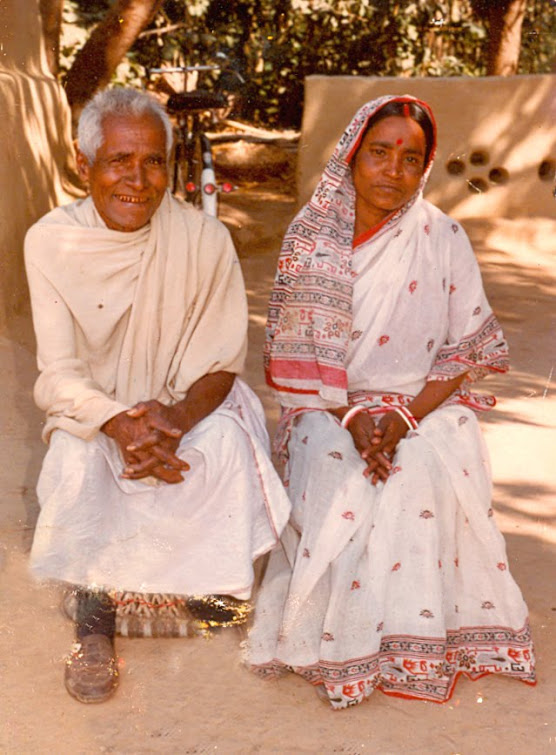
While my Parents Pulin babu and Basanti devi were living
Saturday, August 30, 2008


JITEM'S BLACK FACE
Wednesday, August 27, 2008
JITEM'S BLACK FACE
http://rastibini. blogspot. com/2008/ 08/jitems- black-face. html
"Beginning on 14 January 1994, almost a hundred people were
individually picked up by commandos wearing uniforms and travelling
in police vehicles. They were then killed somewhere along the road
from Ankara to Istanbul, in the "satanic triangle" of Kocaeli, a
fiefdom of the far-right mafia and a focal point for the trafficking
of heroin into Europe."
~ Kendal Nezan.
What follows is not exactly news because it's typical behavior of
JITEM with which Kurds in Turkish-occupied Kurdistan have long been
familiar. But this news did come out in a Turkish daily and,
according to the article, the information is contained in one of the
Ergenekon files. This is the tip of the iceburg and shows that DTP
politicians, such as Ahmet Türk and Emine Ayna are correct in their
calls for the Ergenekon investigation to be expanded to the east of
the Fýrat (Euphrates).
This news is also at odds with the Bush regime's recent attempt to
blacken PKK with charges of drug-trafficking, especially since it's
widely known that the Ankara regime has long held a regional
monopoly on the processing of heroin, a fact which has been a
recurring theme in the Sibel Edmonds case.
From Bugün:
http://www.bugun. com.tr/haber_ detay.asp? haberID=37615
Here is JITEM's black face
An important document was found in the house of [Adnan] Akfýrat, who
has been arrested in the Ergenekon case. In the document, activities
of troops on duty on the border [in The Southeast] between 1981 to
1990, were outlined in detail.
In Ergenekon's documents, which are noted as "The Writings of a Non-
Commissioned Officer Who Wrote Additional Information for JITEM
Files to Be Given to the Jandarma Headquarters Command", the duties
that were carried out by the troops which were on duty between 1981
to 1990 in Þýrnak, Diyarbakýr, Van, and other border regions,
including some soldiers ranked as field grade officers, were listed
in detail.
This informant document about JITEM was found in Adnan Akfýrat's
house, who was the news manager of [Doðu] Perinçek's magazine,
published in the 1990s, called Toward 2000. According to the NCO who
wrote the document, high-ranking soldiers conducted illegal drug-
trafficking and arms sales with Village Guards in conflict areas
like Diyarbakýr, Van, and Þýrnak.
Narcotic and human trafficking
In the informant document, it is mentioned that the soldiers and
Village Guards who smuggled weapons and tons of narcotics to Iraq
earned huge sums of money. Human trafficking, the weapons and
narcotics trade, and the rape of refugee women are some of the
crimes committed by JITEM personnel. Despite being caught, they
[JITEM personnel, soldiers, and Village Guards involved in this
business] were protected by MÝT.
They sold weapons to PKK
The informant document, which is in the Ergenekon indictment's 208th
evidence file, mentions that Major Kamber O, Lieutenant Colonel
Reþit D, Major Ýsmail A, First Lieutenant Cihan B, First Lieutenant
Kemal Þ, Sergeant Ýbrahim K, Diyarbakýr JITEM Group Commander Major
Nurettin, established a group which included also Village Guards,
and conducted human and narcotics trafficking, and weapons smuggling.
150,000 weapons collected
The claims in the informant document are terrifying:
First Lieutenant Cihan B was the commander of the 4th Border Company
in Ortabað, which was under the command of the Þenoba Border
Battalion. Some Village Guards were among his men. From time to
time, he sent these men to Iraq to buy TVs, videos, tapes,
electronic games, and electronic devices. He sold these in
Diyarbakýr's Japan Bazaar. During the Gulf War, he assisted Iraqi
refugees in crossing the border into Turkey, for a price. There were
approximately 300,000 refugees. He collected around 150,000 weapons.
Sergeant Ýbrahim K shared money and gems that he collected from the
refugees, with the battalion commander. He forced refugee women to
have sexual relations.
First Lieutenant Kemal Þ smuggled flocks of sheep and tons of flour
to Iraq during the war.
Now I know you noticed the sub-headline mentioning the sales of
weapons to PKK, but there was no other mention of PKK in the entire
article. If there were sales of weapons to PKK outlined in the
informant document of the Ergenekon file, there would have been more
information about that included in the Bugün article. Instead, what
we have in the sub-headline is nothing more than gratuitous crap.
Most of the information here is pretty mild compared to the horrors
that were visited upon the Kurdish population from 1990 onward.
Those years must also be investigated and the information published
in every Turkish daily.
JITEM'S BLACK FACE
http://rastibini. blogspot. com/2008/ 08/jitems- black-face. html
"Beginning on 14 January 1994, almost a hundred people were
individually picked up by commandos wearing uniforms and travelling
in police vehicles. They were then killed somewhere along the road
from Ankara to Istanbul, in the "satanic triangle" of Kocaeli, a
fiefdom of the far-right mafia and a focal point for the trafficking
of heroin into Europe."
~ Kendal Nezan.
What follows is not exactly news because it's typical behavior of
JITEM with which Kurds in Turkish-occupied Kurdistan have long been
familiar. But this news did come out in a Turkish daily and,
according to the article, the information is contained in one of the
Ergenekon files. This is the tip of the iceburg and shows that DTP
politicians, such as Ahmet Türk and Emine Ayna are correct in their
calls for the Ergenekon investigation to be expanded to the east of
the Fýrat (Euphrates).
This news is also at odds with the Bush regime's recent attempt to
blacken PKK with charges of drug-trafficking, especially since it's
widely known that the Ankara regime has long held a regional
monopoly on the processing of heroin, a fact which has been a
recurring theme in the Sibel Edmonds case.
From Bugün:
http://www.bugun. com.tr/haber_ detay.asp? haberID=37615
Here is JITEM's black face
An important document was found in the house of [Adnan] Akfýrat, who
has been arrested in the Ergenekon case. In the document, activities
of troops on duty on the border [in The Southeast] between 1981 to
1990, were outlined in detail.
In Ergenekon's documents, which are noted as "The Writings of a Non-
Commissioned Officer Who Wrote Additional Information for JITEM
Files to Be Given to the Jandarma Headquarters Command", the duties
that were carried out by the troops which were on duty between 1981
to 1990 in Þýrnak, Diyarbakýr, Van, and other border regions,
including some soldiers ranked as field grade officers, were listed
in detail.
This informant document about JITEM was found in Adnan Akfýrat's
house, who was the news manager of [Doðu] Perinçek's magazine,
published in the 1990s, called Toward 2000. According to the NCO who
wrote the document, high-ranking soldiers conducted illegal drug-
trafficking and arms sales with Village Guards in conflict areas
like Diyarbakýr, Van, and Þýrnak.
Narcotic and human trafficking
In the informant document, it is mentioned that the soldiers and
Village Guards who smuggled weapons and tons of narcotics to Iraq
earned huge sums of money. Human trafficking, the weapons and
narcotics trade, and the rape of refugee women are some of the
crimes committed by JITEM personnel. Despite being caught, they
[JITEM personnel, soldiers, and Village Guards involved in this
business] were protected by MÝT.
They sold weapons to PKK
The informant document, which is in the Ergenekon indictment's 208th
evidence file, mentions that Major Kamber O, Lieutenant Colonel
Reþit D, Major Ýsmail A, First Lieutenant Cihan B, First Lieutenant
Kemal Þ, Sergeant Ýbrahim K, Diyarbakýr JITEM Group Commander Major
Nurettin, established a group which included also Village Guards,
and conducted human and narcotics trafficking, and weapons smuggling.
150,000 weapons collected
The claims in the informant document are terrifying:
First Lieutenant Cihan B was the commander of the 4th Border Company
in Ortabað, which was under the command of the Þenoba Border
Battalion. Some Village Guards were among his men. From time to
time, he sent these men to Iraq to buy TVs, videos, tapes,
electronic games, and electronic devices. He sold these in
Diyarbakýr's Japan Bazaar. During the Gulf War, he assisted Iraqi
refugees in crossing the border into Turkey, for a price. There were
approximately 300,000 refugees. He collected around 150,000 weapons.
Sergeant Ýbrahim K shared money and gems that he collected from the
refugees, with the battalion commander. He forced refugee women to
have sexual relations.
First Lieutenant Kemal Þ smuggled flocks of sheep and tons of flour
to Iraq during the war.
Now I know you noticed the sub-headline mentioning the sales of
weapons to PKK, but there was no other mention of PKK in the entire
article. If there were sales of weapons to PKK outlined in the
informant document of the Ergenekon file, there would have been more
information about that included in the Bugün article. Instead, what
we have in the sub-headline is nothing more than gratuitous crap.
Most of the information here is pretty mild compared to the horrors
that were visited upon the Kurdish population from 1990 onward.
Those years must also be investigated and the information published
in every Turkish daily.
Q & A with Hamas Politburo Member, Muhammad Nazzal
Q & A with Hamas Politburo Member, Muhammad Nazzal
24/08/2008
By Ali El-Saleh in London
http://aawsat. com/english/ news.asp? section=3& id=13835
Q) Does Hamas hope to reestablish ties with Jordan?
A) The meetings in Amman were supposed to lay the foundations for
new relations between the Jordanian government and the Hamas
Movement. It is to be recalled that relations between the two
parties were severed in 1999, and remained cool for approximately a
decade. During that time, attempts were made to activate ties, but
they failed. That state continued until the latest Hamas's members
visit to Amman and meetings with the Jordanian General Intelligence
Department [GID] officials. So it can be said that the visit by a
Hamas delegation to Amman will, God willing, usher in a new stage in
relations free from the tension that marred (relations with Jordan)
over the past few years.
Q) What developments led to this get-together? Which party initiated
first contact?
A) In fact, the initiative came from the Jordanian GID, and was met
with prompt response from Hamas; to be more exact, it can be said
that both parties had a common desire to meet with one another.
Q) Have you reached an agreement or some sort of understanding with
Jordan?
A) I can say that during the meeting some understandings were
reached. We discussed some pending security files in an amicable
atmosphere, and we are currently trying to solve them. We also
discussed political issues relating to the core political position
of Jordan and Hamas in particular. This is because there are common
issues, and the Palestinian issue is for Jordan a domestic issue. We
discussed these political files frankly, openly, and transparently.
Q) In your view, will Khalid Mishal, the Hamas Movement's Political
Bureau chief, visit Jordan in the near future?
A) In fact, nothing can be ruled out. While the talk of Mishal's
visit to Amman was reported by the media, in fact, this issue was
not discussed during the meetings with the GID officials.
Q) Do you expect Hamas to open an office in Amman soon?
A) No, this issue was not discussed. We certainly wish the Hamas
Movement to have some presence in Jordan, but the form and mechanism
of such presence were not discussed with the Jordanians.
Q) Did Jordan set specific conditions? It was reported that Jordan
asked Hamas not to intervene in the affairs of the Islamic groups in
Jordan and not to carry out any security activities, such as
recruiting people, and so on and so forth?
A) Neither party set any conditions. But, as I have said, we
discussed numerous political and security issues and ways of
strengthening bilateral relations, not on the basis of conditions,
but on the basis of what each party clearly wants from the other.
Q) In your opinion, does the Jordanian move toward Hamas have
anything to do with developments in the region?
A) We in the Hamas Movement are not concerned with the motives
behind this shift in Jordan's stand or move toward relations with
Hamas. We viewed this move as a positive development and that we
must respond positively and support it. Frankly speaking, we are not
concerned with discussing the background or motives of the Jordanian
move; the talk of motives and background concerns political
analysts. In political activity, it is said that one must not look
for intentions but results. We want practical and positive results
of relations between Hamas and Jordan.
Q) Does this rapprochement have anything to do with Hamas's
apprehensions and its leaders' search for a safe haven in case
indirect negotiations between Syria and Israel may lead to a peace
agreement between the two countries?
A) This is absolutely not true because we are not looking for havens
for the Hamas Movement. We are looking for accord with all Arab and
Islamic parties, particularly the neighboring countries, notably
Egypt, Jordan, Syria, and Lebanon. These countries are neighboring
Israel and relations with them must be of a strategic nature. So we
are looking for accords and points of agreements with these
countries, not for a haven. We do not feel any concern over the
presence of the Hamas Movement in Syria because, based on our
reading of the current political situation, we believe that a Syrian-
Israeli agreement is still not close at hand.
Q) In your view, will relations between Jordan and Hamas have a
negative impact on other countries, like, Egypt for example?
A) Rapprochement in relations with Egypt and Jordan must not be at
the expense of other Arab countries, especially Egypt. We do not
establish relations with one party at the expense of other parties,
but we seek balance in relations among all Arab and Islamic parties.
We are opposed to the policy of axes in the first place, and we are
against the policy of taking sides with one party against another.
We always seek balance in Arab relations whether with Hamas or with
the Fatah Movement and the Palestinian presidency. So our
rapprochement with Jordan must not be at the expense of relations
with Egypt.
Q) In your meetings with the Jordanians, did you discuss Hamas's
relations with the Palestinian Authority and Fatah? In other words,
is Jordan intending on bringing the two parties closer together?
A) In fact, all political files were discussed, including Hamas's
relations with the Palestinian presidency and the Fatah Movement. We
explained our viewpoint that the intransigent party is the other
party, and that there is a US veto which President Mahmud Abbas
appears to be unable to bypass. Therefore, all attempts at
rapprochement, dialogue, and reconciliation between the two parties
come up against a US Brick wall. This is what we told the brothers
in Jordan.
Q) Did Jordan react positively to this?
A) The Jordanian party realizes the difficulty of intra-Palestinian
dialogue under the US veto. This is why we did not place any role
for Jordan regarding this issue on the agenda of our meetings,
though we welcome any Jordanian or Arab role in bringing about
rapprochement between Hamas and the Fatah Movement. We know that the
regional and Arab parties realize that these attempts would come up
against a US brick wall. So in my view, these parties will not try
to get involved in any intra-Palestinian reconciliation process
unless there is a green light, specifically from the US
Administration.
Q) Is this the same US brick wall you came up against and which led
to your deportation from Jordan along with Khalid Mishal and Musa
Abu-Marzuq in 1999? Wasn't there US pressure at the time to deport
you from Amman?
A) Certainly there was US pressure, but I think there was also
Israeli and Palestinian Arafatist (the late President Yasser Arafat)
pressure, as well as Jordanian considerations. All these factors
combined played a part in harming our relations with Jordan and led
to what happened in 1999. But we have to understand that the world
has changed and that the situation cannot remain the same. There is
nothing impossible in politics, and states, political parties,
groups, and movements all look for their interests. So Jordan found
that its interest does not lie in continued rupture of relations
with Hamas, but in openness to Hamas and to other groups. This stand
serves Jordan's political interest. Openness to Hamas is a positive
Jordanian step forward which we must appreciate, develop, encourage,
and push forward. We must not question or have any suspicion about
Jordan's move, as this would only bring us back to square one. We
are required to look forward and to read the Jordanian political
step as a positive adjustment to the changes and circumstances that
the region is going through.
Q) When did contact with Jordan begin and when did you agree to
meet?
A) The first meeting took place on 21 July and the second meeting
took place on Wednesday, 13 August.
Q) Did the shift that led to this rapprochement begin with Jordan or
Hamas?
A) In my opinion, the question is not a shift in the Jordanian or in
Hamas's stand; it is an accurate and enlightened reading of the
changes our region is going through. These changes impel all parties
to look for equations that strengthen their position and achieve
their interests. So I do not think this development should be
reduced into a question of which party shifted its stance or which
party initiated this step. This issue must be considered in a
comprehensive way and from all angles. Regional developments require
that all parties deal with them flexibly and wisely.
Q) Since rapprochement between Jordan and Hamas and their finding of
a common ground between them has been possible, isn't it more
appropriate for Hamas to find a common ground with the Fatah
Movement and the Palestinian presidency?
A) This rapprochement with Jordan will inevitably impel the other
party to read the issue differently. In my view, when a party makes
a mistake in exercising policy, this mistake could be the result of
this party's erroneous assessment of the realities on the ground. It
could also be the result of lack of political will. I think that the
Palestinian presidency and the Fatah Movement were erroneous in
reading the situation when Hamas took control of the Gaza Strip.
They believed that Hamas 's control of Gaza would be a predicament
for Hamas and that Hamas would sooner or later fall down along with
the authority it established in the Gaza Strip. This reading of the
situation proved wrong, for Hamas has remained steadfast one and a
half years since its control of Gaza. If the [Palestinian]
presidency and the Fatah Movement now read the situation
differently, what remains has to do with political will. The
Palestinian presidency and the Fatah Movement do not have the
political will to hold a real and serious dialogue with the Hamas
Movement, or to hold a comprehensive Palestinian national dialogue.
I am speaking frankly of the official Palestinian will, which is
contingent upon US-Israeli will. There is no US-Israeli will for a
serious dialogue between Hamas and Fatah that would result in
rapprochement or agreement between them. So if we ask why
rapprochement has been brought about between Hamas and Jordan and
not between the friends who stand in the same trench -- the comrades
in the Fatah and Hamas movement -- I think this has to do with
political will.
Q) I gather from your argument that steps made to bring about an
agreement between Hamas and Fatah would be futile in the absence of
a political will?
A) I think the intra-Palestinian dialogue will be postponed until
after the US presidential elections. The parties that want to
unleash intra-Palestinian dialogue are waiting for the results of
the US elections, because under the current US Administration there
is a veto which the parties cannot bypass. So what is at issue is
not an intra-Palestinian dialogue, but awaiting the results of the
US elections, and whether (Democratic candidate) Barack Obama will
be able to defeat (Republican candidate) John McCain. It would then
be possible to bank on a Democratic administration to unleash a
national Palestinian dialogue. This is the reading or the situation
that the other party is waiting for.
Q) So you think that the talk of sending Egyptian invitations to the
Palestinian groups to hold bilateral talks in preparation for a
comprehensive dialogue is in this context?
A) First of all, Cairo has not addressed an invitation for an intra-
Palestinian dialogue. It sent a paper containing a host of questions
to learn the views of the Palestinian groups of the mechanism
through which the Palestinian split can be addressed. Egypt is
currently awaiting the response of these groups and on the basis of
which it will decide whether or not to continue its efforts to
unleash a national Palestinian dialogue. So it can be said that what
is happening in this respect is no more than marking time, because
Egypt will not take any step before the results of the US elections
appear. So the Palestinians are being made busy discussing the issue
of dialogue, but no real, serious steps have been taken to begin a
dialogue. I do not think that the climate is now favorable for
unleashing an intra-Palestinian dialogue.
Q) Have you conveyed his viewpoint to the Egyptian authorities?
A) Yes. We sent a message to the Egyptian authorities in reply to
theirs expressing our viewpoint on Palestinian dialogue and the
basis on which it may start.
Q) Let us go back to the issue of Jordan; while in Amman did you
meet with other political figures?
A) No. Our meetings were confined to the GID director and a number
of senior GID officers.
Q) Why?
A) Because we did not have enough time, and because we went to Amman
to discuss a specific issue.
Q) Egypt has accused Hamas of stalling in reaching a deal regarding
the Israeli captive soldier Gilad Shalit before getting Israeli
guarantees that it will not attack Hamas leaders in Gaza, is this
true?
A) This is absolutely not true. These are false and unfair
accusations. We are eager to release Shalit because his release
would mean the release of hundreds of Palestinian POWs. I do not
think Hamas has an interest in keeping Shalit. However, Hamas does
not want to release him for a cheap price as the Israelis want. We
are clear in our stated position that we will not respond positively
to any pressure to release Shalit in a deal that is not honorable.
We are looking for an honorable deal that will achieve the objective
for which we took him prisoner. So we reject any accusations that we
hamper a deal. It is regrettable to hear statements condemning the
Hamas Movement and acquitting Israel, which is the intransigent
party that hampers a deal by setting impossible conditions that no
honest Palestinian movement could accept.
Q) Do you think we will see an end to the Shalit and the POW issue
soon?
A) I think solving this issue needs time because I believe that the
Israeli leaders are not yet ready to pay the price for releasing
Shalit. So unless some dramatic change occurs in the Israeli stand,
his release will not come about in the near future.
Q) Are the reports that Hamas is looking for a new mediator instead
of Egypt true?
A) We are not looking for a substitute to Egypt. Egypt remains the
mediator, but other parties have contacted Hamas and asked to
intercede. We said that the issue needs the agreement of all the
parties concerned. We also said that we will not stand in the way of
any party the wants to exert efforts to help release the POWs. The
field is open to all to make moves, but we will not look for a new
mediator other than Egypt.
Q) Are the parties that asked to intercede in this issue Arab or
European?
A) Arab and foreign parties have offered to intervene and they
expressed readiness to exert efforts in this respect.
Q) Was Qatar one of these parties?
A) I do not wish to elaborate further regarding these parties.
24/08/2008
By Ali El-Saleh in London
http://aawsat. com/english/ news.asp? section=3& id=13835
Q) Does Hamas hope to reestablish ties with Jordan?
A) The meetings in Amman were supposed to lay the foundations for
new relations between the Jordanian government and the Hamas
Movement. It is to be recalled that relations between the two
parties were severed in 1999, and remained cool for approximately a
decade. During that time, attempts were made to activate ties, but
they failed. That state continued until the latest Hamas's members
visit to Amman and meetings with the Jordanian General Intelligence
Department [GID] officials. So it can be said that the visit by a
Hamas delegation to Amman will, God willing, usher in a new stage in
relations free from the tension that marred (relations with Jordan)
over the past few years.
Q) What developments led to this get-together? Which party initiated
first contact?
A) In fact, the initiative came from the Jordanian GID, and was met
with prompt response from Hamas; to be more exact, it can be said
that both parties had a common desire to meet with one another.
Q) Have you reached an agreement or some sort of understanding with
Jordan?
A) I can say that during the meeting some understandings were
reached. We discussed some pending security files in an amicable
atmosphere, and we are currently trying to solve them. We also
discussed political issues relating to the core political position
of Jordan and Hamas in particular. This is because there are common
issues, and the Palestinian issue is for Jordan a domestic issue. We
discussed these political files frankly, openly, and transparently.
Q) In your view, will Khalid Mishal, the Hamas Movement's Political
Bureau chief, visit Jordan in the near future?
A) In fact, nothing can be ruled out. While the talk of Mishal's
visit to Amman was reported by the media, in fact, this issue was
not discussed during the meetings with the GID officials.
Q) Do you expect Hamas to open an office in Amman soon?
A) No, this issue was not discussed. We certainly wish the Hamas
Movement to have some presence in Jordan, but the form and mechanism
of such presence were not discussed with the Jordanians.
Q) Did Jordan set specific conditions? It was reported that Jordan
asked Hamas not to intervene in the affairs of the Islamic groups in
Jordan and not to carry out any security activities, such as
recruiting people, and so on and so forth?
A) Neither party set any conditions. But, as I have said, we
discussed numerous political and security issues and ways of
strengthening bilateral relations, not on the basis of conditions,
but on the basis of what each party clearly wants from the other.
Q) In your opinion, does the Jordanian move toward Hamas have
anything to do with developments in the region?
A) We in the Hamas Movement are not concerned with the motives
behind this shift in Jordan's stand or move toward relations with
Hamas. We viewed this move as a positive development and that we
must respond positively and support it. Frankly speaking, we are not
concerned with discussing the background or motives of the Jordanian
move; the talk of motives and background concerns political
analysts. In political activity, it is said that one must not look
for intentions but results. We want practical and positive results
of relations between Hamas and Jordan.
Q) Does this rapprochement have anything to do with Hamas's
apprehensions and its leaders' search for a safe haven in case
indirect negotiations between Syria and Israel may lead to a peace
agreement between the two countries?
A) This is absolutely not true because we are not looking for havens
for the Hamas Movement. We are looking for accord with all Arab and
Islamic parties, particularly the neighboring countries, notably
Egypt, Jordan, Syria, and Lebanon. These countries are neighboring
Israel and relations with them must be of a strategic nature. So we
are looking for accords and points of agreements with these
countries, not for a haven. We do not feel any concern over the
presence of the Hamas Movement in Syria because, based on our
reading of the current political situation, we believe that a Syrian-
Israeli agreement is still not close at hand.
Q) In your view, will relations between Jordan and Hamas have a
negative impact on other countries, like, Egypt for example?
A) Rapprochement in relations with Egypt and Jordan must not be at
the expense of other Arab countries, especially Egypt. We do not
establish relations with one party at the expense of other parties,
but we seek balance in relations among all Arab and Islamic parties.
We are opposed to the policy of axes in the first place, and we are
against the policy of taking sides with one party against another.
We always seek balance in Arab relations whether with Hamas or with
the Fatah Movement and the Palestinian presidency. So our
rapprochement with Jordan must not be at the expense of relations
with Egypt.
Q) In your meetings with the Jordanians, did you discuss Hamas's
relations with the Palestinian Authority and Fatah? In other words,
is Jordan intending on bringing the two parties closer together?
A) In fact, all political files were discussed, including Hamas's
relations with the Palestinian presidency and the Fatah Movement. We
explained our viewpoint that the intransigent party is the other
party, and that there is a US veto which President Mahmud Abbas
appears to be unable to bypass. Therefore, all attempts at
rapprochement, dialogue, and reconciliation between the two parties
come up against a US Brick wall. This is what we told the brothers
in Jordan.
Q) Did Jordan react positively to this?
A) The Jordanian party realizes the difficulty of intra-Palestinian
dialogue under the US veto. This is why we did not place any role
for Jordan regarding this issue on the agenda of our meetings,
though we welcome any Jordanian or Arab role in bringing about
rapprochement between Hamas and the Fatah Movement. We know that the
regional and Arab parties realize that these attempts would come up
against a US brick wall. So in my view, these parties will not try
to get involved in any intra-Palestinian reconciliation process
unless there is a green light, specifically from the US
Administration.
Q) Is this the same US brick wall you came up against and which led
to your deportation from Jordan along with Khalid Mishal and Musa
Abu-Marzuq in 1999? Wasn't there US pressure at the time to deport
you from Amman?
A) Certainly there was US pressure, but I think there was also
Israeli and Palestinian Arafatist (the late President Yasser Arafat)
pressure, as well as Jordanian considerations. All these factors
combined played a part in harming our relations with Jordan and led
to what happened in 1999. But we have to understand that the world
has changed and that the situation cannot remain the same. There is
nothing impossible in politics, and states, political parties,
groups, and movements all look for their interests. So Jordan found
that its interest does not lie in continued rupture of relations
with Hamas, but in openness to Hamas and to other groups. This stand
serves Jordan's political interest. Openness to Hamas is a positive
Jordanian step forward which we must appreciate, develop, encourage,
and push forward. We must not question or have any suspicion about
Jordan's move, as this would only bring us back to square one. We
are required to look forward and to read the Jordanian political
step as a positive adjustment to the changes and circumstances that
the region is going through.
Q) When did contact with Jordan begin and when did you agree to
meet?
A) The first meeting took place on 21 July and the second meeting
took place on Wednesday, 13 August.
Q) Did the shift that led to this rapprochement begin with Jordan or
Hamas?
A) In my opinion, the question is not a shift in the Jordanian or in
Hamas's stand; it is an accurate and enlightened reading of the
changes our region is going through. These changes impel all parties
to look for equations that strengthen their position and achieve
their interests. So I do not think this development should be
reduced into a question of which party shifted its stance or which
party initiated this step. This issue must be considered in a
comprehensive way and from all angles. Regional developments require
that all parties deal with them flexibly and wisely.
Q) Since rapprochement between Jordan and Hamas and their finding of
a common ground between them has been possible, isn't it more
appropriate for Hamas to find a common ground with the Fatah
Movement and the Palestinian presidency?
A) This rapprochement with Jordan will inevitably impel the other
party to read the issue differently. In my view, when a party makes
a mistake in exercising policy, this mistake could be the result of
this party's erroneous assessment of the realities on the ground. It
could also be the result of lack of political will. I think that the
Palestinian presidency and the Fatah Movement were erroneous in
reading the situation when Hamas took control of the Gaza Strip.
They believed that Hamas 's control of Gaza would be a predicament
for Hamas and that Hamas would sooner or later fall down along with
the authority it established in the Gaza Strip. This reading of the
situation proved wrong, for Hamas has remained steadfast one and a
half years since its control of Gaza. If the [Palestinian]
presidency and the Fatah Movement now read the situation
differently, what remains has to do with political will. The
Palestinian presidency and the Fatah Movement do not have the
political will to hold a real and serious dialogue with the Hamas
Movement, or to hold a comprehensive Palestinian national dialogue.
I am speaking frankly of the official Palestinian will, which is
contingent upon US-Israeli will. There is no US-Israeli will for a
serious dialogue between Hamas and Fatah that would result in
rapprochement or agreement between them. So if we ask why
rapprochement has been brought about between Hamas and Jordan and
not between the friends who stand in the same trench -- the comrades
in the Fatah and Hamas movement -- I think this has to do with
political will.
Q) I gather from your argument that steps made to bring about an
agreement between Hamas and Fatah would be futile in the absence of
a political will?
A) I think the intra-Palestinian dialogue will be postponed until
after the US presidential elections. The parties that want to
unleash intra-Palestinian dialogue are waiting for the results of
the US elections, because under the current US Administration there
is a veto which the parties cannot bypass. So what is at issue is
not an intra-Palestinian dialogue, but awaiting the results of the
US elections, and whether (Democratic candidate) Barack Obama will
be able to defeat (Republican candidate) John McCain. It would then
be possible to bank on a Democratic administration to unleash a
national Palestinian dialogue. This is the reading or the situation
that the other party is waiting for.
Q) So you think that the talk of sending Egyptian invitations to the
Palestinian groups to hold bilateral talks in preparation for a
comprehensive dialogue is in this context?
A) First of all, Cairo has not addressed an invitation for an intra-
Palestinian dialogue. It sent a paper containing a host of questions
to learn the views of the Palestinian groups of the mechanism
through which the Palestinian split can be addressed. Egypt is
currently awaiting the response of these groups and on the basis of
which it will decide whether or not to continue its efforts to
unleash a national Palestinian dialogue. So it can be said that what
is happening in this respect is no more than marking time, because
Egypt will not take any step before the results of the US elections
appear. So the Palestinians are being made busy discussing the issue
of dialogue, but no real, serious steps have been taken to begin a
dialogue. I do not think that the climate is now favorable for
unleashing an intra-Palestinian dialogue.
Q) Have you conveyed his viewpoint to the Egyptian authorities?
A) Yes. We sent a message to the Egyptian authorities in reply to
theirs expressing our viewpoint on Palestinian dialogue and the
basis on which it may start.
Q) Let us go back to the issue of Jordan; while in Amman did you
meet with other political figures?
A) No. Our meetings were confined to the GID director and a number
of senior GID officers.
Q) Why?
A) Because we did not have enough time, and because we went to Amman
to discuss a specific issue.
Q) Egypt has accused Hamas of stalling in reaching a deal regarding
the Israeli captive soldier Gilad Shalit before getting Israeli
guarantees that it will not attack Hamas leaders in Gaza, is this
true?
A) This is absolutely not true. These are false and unfair
accusations. We are eager to release Shalit because his release
would mean the release of hundreds of Palestinian POWs. I do not
think Hamas has an interest in keeping Shalit. However, Hamas does
not want to release him for a cheap price as the Israelis want. We
are clear in our stated position that we will not respond positively
to any pressure to release Shalit in a deal that is not honorable.
We are looking for an honorable deal that will achieve the objective
for which we took him prisoner. So we reject any accusations that we
hamper a deal. It is regrettable to hear statements condemning the
Hamas Movement and acquitting Israel, which is the intransigent
party that hampers a deal by setting impossible conditions that no
honest Palestinian movement could accept.
Q) Do you think we will see an end to the Shalit and the POW issue
soon?
A) I think solving this issue needs time because I believe that the
Israeli leaders are not yet ready to pay the price for releasing
Shalit. So unless some dramatic change occurs in the Israeli stand,
his release will not come about in the near future.
Q) Are the reports that Hamas is looking for a new mediator instead
of Egypt true?
A) We are not looking for a substitute to Egypt. Egypt remains the
mediator, but other parties have contacted Hamas and asked to
intercede. We said that the issue needs the agreement of all the
parties concerned. We also said that we will not stand in the way of
any party the wants to exert efforts to help release the POWs. The
field is open to all to make moves, but we will not look for a new
mediator other than Egypt.
Q) Are the parties that asked to intercede in this issue Arab or
European?
A) Arab and foreign parties have offered to intervene and they
expressed readiness to exert efforts in this respect.
Q) Was Qatar one of these parties?
A) I do not wish to elaborate further regarding these parties.
Mauritania's Military and the Democratic Obsession
Mauritania's Military and the Democratic Obsession
Mohammad el-Ashab
Al-Hayat - 29/08/08//
http://english. daralhayat. com/opinion/ OPED/08-2008/ Article-20080829 -
0ec63839-c0a8- 10ed-01bf- ee337f66f5db/ story.html
The situation in Mauritania will not return to what it was before
the sixth of August. At the very least, the atmosphere that
prevailed after the August 2005 coup can be conjured up, but the
situation will not settle as what it was in the days which preceded
General Muhammad Ould Abd Al-Aziz's coup.
The difference between the two coups is that the influential general
was not at the forefront of the one which toppled President Maaouya
Ould Taya. The forefront was then occupied by another member of the
military, Colonel Ely Ould Mohamed Vall, who was able to ensure an
internal outlet for the experience, one that contained foreign
criticism. However, Muhammad Ould Abd Al-Aziz wagered on leaving
those who oppose his coup a greater margin for movement, at least to
appear like a democracy. Indeed, no parties were banned and no state
of emergency declared, as are common practices during coups.
Such a positive appearance indicates that the High Council of State,
despite the fact that it is made up of members of the military, did
not succeed in excluding those who call for the return of
legitimacy. Perhaps the difference is that the Council wants
legitimacy on the ruins of toppled President Ould Cheikh Abdallahi's
mandate, legitimacy with qualities that will achieve a second coup
led by civilians through ballot boxes, as long as the result will be
the same.
Yet the experiment could have achieved the same goal with a little
self-restraint from both sides, the military and the presidency. At
least, the military institution could have remained neutral, and the
president could have resigned willingly. President Ould Cheikh
Abdallahi was known not to cling to power. Yet leaving power in a
way that would restore his dignity would be better than putting him
under house arrest.
Between the president dismissing influential military leaders, and
the latter, headed by General Muhammad Ould Abd Al-Aziz, toppling
him, there is an emotional moment, the influence of which
politicians and soldiers are usually careful to avoid. Yet when
escalation has been resorted to, the utmost responsibility of the
makers and breakers of solutions in Mauritania becomes to look for a
face-saving way out for the quarreling parties.
Those who oppose the coup are wagering on the return of legitimacy.
Those who call for what can be described as the "rectification
movement" agree on the inevitability of handing power over to
civilians through honest and transparent elections. The difference
between the two is that there are those who want to restore the
dignity of toppled President Ould Cheikh Abdallahi, and those who
simply seek to open a new chapter. The fact that the appearance of
contradiction between the two has been maintained can only mean that
the state of paralysis is ongoing and may lead to further
complications. The Mauritanian people insist that they do not want
such complications, at any cost. The country is not ready for the
reign of instability under any circumstances. The Mauritanian people
have found themselves distributing loyalty, without that meaning
that all those who seek the return of legitimacy do so for the good
of the president, or that all those who support the High Council of
State do so to upset potential political rivals.
Perhaps the origin of the problem is that the fledgling democracy in
Nouakchott came at the political initiative of the military
institution, an institution which rid the country of an opposition
that was becoming too influential. If it does not publicly reap the
fruits of such a change, then it must at least maintain its role of
watchful arbiter that must not interfere. The fact of the matter is
that the political elite has consented to maintaining the duality of
this game and is unlikely to get rid of its implications without
paying a price.
Democracy in Mauritania had greater ambitions than it could bear.
Not because it was not up to the ambition, but because all the
different parties saw it as an end in itself, although it was still
learning to take its first steps. What was most dangerous was for
the army alone to be the guardian of democracy's gate. Such a gate
would in that case only let through those who carry the special
pass, distributed only to those loyal to the army.
Like the oil boom that appeared suddenly, and which the people of
Mauritania thought would lead them to progress and prosperity before
officials and companies drown in its stagnant oil wells, thus the
democratic obsession leaped to the forefront, doing away with old
companions and wagers. However, the Mauritanian people, who have
developed their own method of cohabitation and dialogue without
resorting to violence, are always able to get rid of the day's
crisis, as it is never more than a stone on the road. The people of
the desert have the habit of looking far away, to where there are
oases, with nothing limiting their vision but the blue of the sky.
Mohammad el-Ashab
Al-Hayat - 29/08/08//
http://english. daralhayat. com/opinion/ OPED/08-2008/ Article-20080829 -
0ec63839-c0a8- 10ed-01bf- ee337f66f5db/ story.html
The situation in Mauritania will not return to what it was before
the sixth of August. At the very least, the atmosphere that
prevailed after the August 2005 coup can be conjured up, but the
situation will not settle as what it was in the days which preceded
General Muhammad Ould Abd Al-Aziz's coup.
The difference between the two coups is that the influential general
was not at the forefront of the one which toppled President Maaouya
Ould Taya. The forefront was then occupied by another member of the
military, Colonel Ely Ould Mohamed Vall, who was able to ensure an
internal outlet for the experience, one that contained foreign
criticism. However, Muhammad Ould Abd Al-Aziz wagered on leaving
those who oppose his coup a greater margin for movement, at least to
appear like a democracy. Indeed, no parties were banned and no state
of emergency declared, as are common practices during coups.
Such a positive appearance indicates that the High Council of State,
despite the fact that it is made up of members of the military, did
not succeed in excluding those who call for the return of
legitimacy. Perhaps the difference is that the Council wants
legitimacy on the ruins of toppled President Ould Cheikh Abdallahi's
mandate, legitimacy with qualities that will achieve a second coup
led by civilians through ballot boxes, as long as the result will be
the same.
Yet the experiment could have achieved the same goal with a little
self-restraint from both sides, the military and the presidency. At
least, the military institution could have remained neutral, and the
president could have resigned willingly. President Ould Cheikh
Abdallahi was known not to cling to power. Yet leaving power in a
way that would restore his dignity would be better than putting him
under house arrest.
Between the president dismissing influential military leaders, and
the latter, headed by General Muhammad Ould Abd Al-Aziz, toppling
him, there is an emotional moment, the influence of which
politicians and soldiers are usually careful to avoid. Yet when
escalation has been resorted to, the utmost responsibility of the
makers and breakers of solutions in Mauritania becomes to look for a
face-saving way out for the quarreling parties.
Those who oppose the coup are wagering on the return of legitimacy.
Those who call for what can be described as the "rectification
movement" agree on the inevitability of handing power over to
civilians through honest and transparent elections. The difference
between the two is that there are those who want to restore the
dignity of toppled President Ould Cheikh Abdallahi, and those who
simply seek to open a new chapter. The fact that the appearance of
contradiction between the two has been maintained can only mean that
the state of paralysis is ongoing and may lead to further
complications. The Mauritanian people insist that they do not want
such complications, at any cost. The country is not ready for the
reign of instability under any circumstances. The Mauritanian people
have found themselves distributing loyalty, without that meaning
that all those who seek the return of legitimacy do so for the good
of the president, or that all those who support the High Council of
State do so to upset potential political rivals.
Perhaps the origin of the problem is that the fledgling democracy in
Nouakchott came at the political initiative of the military
institution, an institution which rid the country of an opposition
that was becoming too influential. If it does not publicly reap the
fruits of such a change, then it must at least maintain its role of
watchful arbiter that must not interfere. The fact of the matter is
that the political elite has consented to maintaining the duality of
this game and is unlikely to get rid of its implications without
paying a price.
Democracy in Mauritania had greater ambitions than it could bear.
Not because it was not up to the ambition, but because all the
different parties saw it as an end in itself, although it was still
learning to take its first steps. What was most dangerous was for
the army alone to be the guardian of democracy's gate. Such a gate
would in that case only let through those who carry the special
pass, distributed only to those loyal to the army.
Like the oil boom that appeared suddenly, and which the people of
Mauritania thought would lead them to progress and prosperity before
officials and companies drown in its stagnant oil wells, thus the
democratic obsession leaped to the forefront, doing away with old
companions and wagers. However, the Mauritanian people, who have
developed their own method of cohabitation and dialogue without
resorting to violence, are always able to get rid of the day's
crisis, as it is never more than a stone on the road. The people of
the desert have the habit of looking far away, to where there are
oases, with nothing limiting their vision but the blue of the sky.
NEWS: The ongoing evolution of the Mahdi Army baffles observers
NEWS: The ongoing evolution of the Mahdi Army baffles observers
Written by Henry Adams
Saturday, 30 August 2008
http://www.ufppc. org/content/ view/7868/ 35/
India's Hindu said Saturday that Moqtada al-Sadr announced last Thursday that the Mahdi Army "will suspend all military operations indefinitely" and will exclude any who disobey the order.[1] -- "Analysts point out that Mr. al-Sadr has increasingly fallen under the influence of Iran, which is playing a key role in creating conditions that would see the exit of foreign troops," wrote Atul Aneja. -- In addition to an "armed [section] for resisting only the occupiers," a new unarmed organization is to be created called "Mumahidoon, " an Arabic word “meaning those who pave the way,” possibly modeled on the Iranian Basij, which "plays a key role in enforcing the regime’s social agenda." -- But AFP reported that "dozens" of radicals associated with Sadr's movement continued to proclaim their loyalty to al-Sadr as they "scrambled on Friday to sign blood oaths to continue their fight against U.S. forces in Iraq despite an order from their leader Moqtada al-Sadr for them to lay down their arms. -- Children as young as 10 were among those seen cutting their thumbs with scalpels and putting a bloodied fingerprint to a document circulated by members of the Sadr movement in the cleric's eastern Baghdad bastion of Sadr City."[2] -- Reuters reported that "it is yet unclear if Shi'ite fighters are preparing another offensive with Iranian help, a U.S. intelligence official said."[3] -- Reporting on Friday from Najaf for the Associated Press, Hamza Hendawi and Qassim Abdul-Zahra suggested the class basis of the rivalry between the Supreme Islamic Iraqi Council (formerly known as the Supreme Council for the Islamic Revolution in Iraq), which draws support from Iraq's merchant class, and the Sadr movement, which represents poor workers.[4] -- The former seeks to create a largely autonomous southern Shiite region of Iraq, of which Najaf might be the capital. -- (Sadr's movement, on the other hand, is resolutely Iraqi nationalist, a point rarely acknowledged in U.S. mainstream media, and one mentioned in none of these articles.) ...
------------ --------- --------- --------- --------- --------- -
1.
International
UNARMED CADRE SOON: AL-SADR
By Atul Aneja
Hindu (India)
August 30, 2008
http://www.hindu. com/2008/ 08/30/stories/ 2008083056681400 .htm
DUBAI -- Leading Iraqi Shia cleric Moqtada al-Sadr has announced that his 60,000 strong Mahdi Army will suspend all military operations indefinitely. He added that a new unarmed cadre of activists was being developed that would be active in the social and cultural fields.
“The Mahdi Army suspension will be valid indefinitely and anyone who does not follow this order will not be considered a member of this group,” said Mr. al-Sadr in the statement on Thursday. The decision assumes significance as the Mahdi army has in the past spearheaded two rebellions against the American occupation forces in Iraq.
Analysts point out that Mr. al-Sadr has increasingly fallen under the influence of Iran, which is playing a key role in creating conditions that would see the exit of foreign troops.
Elaborating on the new directive, a senior member of the al-Sadr group, Sayid Fareed Al-Fadhili said the Mahdi Army would have a two-tiered structure. “The first section is the armed one for resisting only the occupiers and to not carry weapons against any other side. The second part will undertake ethical and cultural issues to change the society from its tendencies toward a secular and Western orientation to a society based on Islamic and religious culture.”
The new non-armed wing would be called Mumahidoon -- an Arabic word “meaning those who pave the way.” Observers say that it remains to be seen whether the new organization would be similar to the Iranian Basij, which plays a key role in enforcing the regime’s social agenda.
Mr. Fadhili said the Mumahidoon’s work would only be “cultural and intellectual.” “We have certain specifications and regulations for each member to join this army, including a good reputation and good education and popularity among his neighbors and society,” he observed.
2.
LOYALISTS OF IRAQ'S SADR SIGN BLOOD OATHS TO CONTINUE FIGHTING
Agence France-Presse
August 29, 2008
http://afp.google. com/article/ ALeqM5gM8XiW7sV5 geqmUzh-bIVdGyOV uA
BAGHDAD -- Dozens of Shiite radicals scrambled on Friday to sign blood oaths to continue their fight against U.S. forces in Iraq despite an order from their leader Moqtada al-Sadr for them to lay down their arms.
Children as young as 10 were among those seen cutting their thumbs with scalpels and putting a bloodied fingerprint to a document circulated by members of the Sadr movement in the cleric's eastern Baghdad bastion of Sadr City.
All vowed to fight on, despite orders by Sadr on Thursday to his 60,000-strong Mahdi Army militia to suspend their armed operations indefinitely.
The order followed two six-month periods in which he had ordered his followers to hold their fire.
"I will follow the orders of Moqtada al-Sadr but I prefer to fight," said Adnan Habib, a 22-year-old labourer who attended Friday prayers in Sadr City.
"I want to sacrifice my soul, my family, for Sadr. I want to resist the occupier," said Habib, who was among those signing blood oaths.
Another Sadr supporter, Ali Abdel, a 19-year-old high school student, said he had been wanting to join the ranks of the Mahdi Army since the death of his mother in an attack targeting a police patrol a year ago.
"My entire family has signed to fight, including my father. If my mother was alive, she would also have signed."
When asked if he knows how to fight, Ali replied with a broad smile: "Which Iraqi does not know how to use a weapon?"
A Sadr official, who asked not to be named, said Sadrists had begun signing oaths in blood 16 days ago and would continue doing so until the end of the Muslim holy fasting month of Ramadan, due to start next week.
"This morning hundreds signed the pledge," the official said. "Blood is most valuable and so we want to show our loyalty to Moqtada with it."
The cleric's latest order came at a time when Washington and Baghdad are negotiating a crucial security agreement to decide the future of U.S. forces in Iraq.
"The Mahdi Army suspension will be valid indefinitely and anyone who does not follow this order will not be considered a member of this group," Sadr said in a statement issued by his office in the Shiite shrine city of Najaf.
Sadr said he wants to create a special unit of fighters who would continue the armed resistance against coalition forces, while the Mahdi Army in general would be transformed into a cultural and social organization.
Falah Hassan Shanshal, a lawmaker from the Sadr bloc in parliament, said the cleric wanted to serve society.
"The philosophy of Moqtada al-Sadr is the same as that of his father Mohammed. Like his father, he wants to serve society and build society," Shanshal told AFP.
He said the movement would organize literacy drives for young men and women although it did accept that most "young men want to resist" the U.S. occupation of Iraq.
Many young Sadr loyalists told AFP they did not see any role for themselves except as fighters.
"I prefer to resist by force using arms, this is the only thing I am capable of doing," said Mohammed Mussa, a baker for the past 18 years.
The militia, created after the 2003 U.S.-led invasion to fight invading American troops, became the most active and feared armed Shiite group in post-Saddam Hussein Iraq, accused of operating death squads blamed for the killings of thousands.
In 2006, at the height of Iraq's communal bloodletting, a Pentagon report said the Mahdi Army was the greatest threat to the country's security, even greater than Al-Qaeda.
Sadr ordered a six-month freeze of Mahdi Army activities in August last year after allegations his fighters had been involved in clashes with security forces in the shrine city of Karbala.
He extended the freeze for a further six months in February and on Thursday ordered an indefinite suspension of the militia's activities.
Sadr led two uprisings against U.S.-led forces in 2004 and had repeatedly vowed to fight on until U.S. troops leave Iraq.
3.
U.S. SEES IRAQ MILITIAS DROPPING ARMS BUT IRAN ROLE UNCLEAR
By Missy Ryan
Reuters
August 29, 2008
http://www.iht. com/articles/ reuters/2008/ 08/29/africa/ OUKWD-UK- IRAQ-MEHDI. php
BAGHDAD -- Iraq's once formidable Mahdi Army appears to be bowing to orders to lay down arms, but it is yet unclear if Shi'ite fighters are preparing another offensive with Iranian help, a U.S. intelligence official said.
The militia, once accused of fuelling civil strife that drove Iraq to the brink of sectarian war, had fought bloody battles with U.S. and Iraqi government forces before a ceasefire last year and a government crackdown earlier this year.
"The Mahdi Army was meant to protect the Shi'ite community and to provide basic needs for Shi'ites," a senior intelligence analyst, speaking on condition of anonymity, said on Friday.
"There's no need (for Mahdi Army) to protect Shi'ites if the government is protecting them," the analyst told Reuters in an interview a day after its leader, Shi'ite cleric Moqtada al-Sadr, extended indefinitely a ceasefire for his militiamen.
The militia is now "hopefully transitioning into an unarmed organization. "
It was Sadr's latest move to constrain the militia, which has held much of Iraq in its grip since the U.S.-led invasion in 2003.
Sadr's extension of the ceasefire, originally declared in August 2007, follows an order for most of his followers to embrace a non-violent struggle to fend off Western domination and to help fellow members of Iraq's Shi'ite majority.
Questions remain, though, about the extent to which Sadr, believed to be holed up in the Iranian city of Qom completing his religious studies, wields control over the militia.
ROGUE FIGHTERS
Violence dropped sharply in one-time Mahdi strongholds after Prime Minister Nuri al-Maliki's offensive against the militants this spring, as has violence across Iraq in the last year.
But U.S. officials have also warned that some militiamen have fled to Iran -- especially members of 'special groups', rogue Mahdi fighters who the United States alleges are funded, equipped, and trained by Iran -- and could easily return.
Attacks attributable to special groups have ebbed, the analyst said, and none were recorded in July or August of this year. Iran vehemently denies a role in Iraqi bloodshed.
Yet the analyst stopped short of saying Iran had dropped its alleged support for Iraqi militia. "We are keeping an eye on Iran's intentions," she said.
The cautious assessment is in sharp contrast to a year ago, when U.S. officials squarely blamed Iran for the special groups' sophisticated weaponry and deadly tactics.
Today, the Mahdi threat is seen as more quotidian. "Our biggest threat now would be those disobedient members, Sadrists or Shi'ites who have access to arms . . . criminals," she said.
The United States is hoping that improving security and greater access to electricity, water, and jobs will make it harder for returning militants to find support.
As the United States describes a turn for the better among Shi'ite militants, it is also seeking to extirpate Sunni militants entrenched in rural areas of Iraq.
Iraqi and U.S. forces have been combing the north-eastern province of Diyala in recent weeks in search of Sunni Arab al Qaeda members, detaining hundreds of suspects and clearing bombs from roads and homes.
They believe al Qaeda is now dug in across the countryside after it was driven out of Baghdad and other cities.
(Editing by Sami Aboudi)
4.
NAJAF -- CITY'S PATH TO GOLDEN FUTURE
By Hamza Hendawi and Qassim Abdul-Zahra
Associated Press
August 29, 2008
http://ap.google. com/article/ ALeqM5gQCe36UkmV u23YNp5iWqTPp5x9 UQD92QQBH80
NAJAF -- The city's first airport is weeks away from opening, but already a bigger one is talked about. Land prices are soaring. Merchants say they don't remember business ever being so good.
Four years ago, Najaf was an urban battlefield, with U.S. troops fighting Shiite militiamen loyal to the cleric Moqtada al-Sadr. Today, the Shiite holy city is a hot spot of a different kind, thanks to improved security, a free-for-all market economy -- and a direct link to the Shiite-led government.
Najaf may become the key to the ambitions for wider autonomy of the most powerful Shiite party -- with far-reaching implications for Iraq.
The Supreme Islamic Iraqi Council hopes to maintain its domination of Najaf's local government in provincial elections expected by early 2009. But its broader goal is a self-governing region in Iraq's Shiite south -- with its oil wealth and important religious shrines.
Shiite rivals oppose such a move, fearing it would cement the Supreme Council's sway over Shiite affairs. Sunni groups, meanwhile, argue that a Shiite autonomous region would fall under Iranian influence and lead to the break-up of Iraq.
"We already are making every effort to win Najaf," said Ridha Jawad Taqi, a Supreme Council MP. "We may well make it the capital of a future region."
It's already getting a major facelift -- even as plans to build new commercial towers and hotels in Baghdad remain little more than blueprints.
But in Najaf, the rumblings are real. Construction teams race to keep pace with millions of Shiite pilgrims who visit the shrine of the revered Imam Ali or bury their dead in the massive Valley of Peace cemetery.
Ahmed Redha, head of the state Investment Authority in Baghdad, estimated that £19 billion in projects are on the drawing board for Najaf and many will be undertaken by private companies. The plans call for luxury hotels and more than 200,000 housing units, he said.
It's all a far cry from 2004. Then, the city's cemetery and old quarter were front lines between U.S. forces and Sadr's Mahdi Army militia until the Shiite clergy mediated.
A dramatic improvement in security has persuaded more Iraqis -- as well as Shiites from abroad -- to travel to Najaf.
Police patrols and checkpoints fill the city, but local authorities say they plan to greatly reduce the number of security forces on the streets by installing security cameras around the shrine and other busy parts.
The locals are happy to see foreign visitors returning, particularly Arabs from the Persian Gulf. "Everyone is doing good business," gold jeweller Aitan Abdul-Hussein said after he served two Iraqi women in his shop. "I sell a kilogram of gold every day. That used to be my monthly average a year ago."
The £27 million airport is giving everyone hope that even better days are ahead. A ceremonial opening took place in July and the anticipation of commercial flights has pushed land prices up by as much as 60 per cent, according to the airport's manager Karim al-Abdali.
The boom is strengthening ties between the Supreme Council -- Sadr's main rival -- and Najaf's merchant class, which takes pride in the city's famous entrepreneurial spirit. It is that spirit, say residents, that has cost Sadr support in 2004 when his militiamen controlled Najaf, driving visitors away and forcing businesses to shut down.
Al-Sadr still enjoys some support in Najaf, but his mix of street politics and violence is deemed by many as bad for the city's economic well being.
Najaf residents appear happy over the jobs and money that have flowed into their city. But some complain that local authorities have much to learn.
For example, no-bid contracts are awarded to local companies with little expertise or resources, while foreign companies remain reluctant to come to Iraq, fearing for the safety of their workers.
"We are still very new in this," said al-Abdali, the airport's director. "In our rush to develop the country we are making mistakes."
The rush to modernize the city is also bringing worries about blows to Najaf's character as the world's oldest seat of Shiite learning and home to the sect's top clerics.
"We stand for preservation and modernization going hand in hand," said Hassan al-Hakim, who lectures on Islamic history in the nearby Kufa university and heads a local foundation to protect the city's heritage.
"There is a danger that expanding the Imam Ali shrine and building more hotels could mean demolishing parts of the old city," he warned in an interview at his Najaf home.
Sheik Ali Bashir al-Najafi, son and top aide of one of Najaf's four top clerics, says the powerful religious Shiite establishment in the city has its own vision for development in Najaf.
"We support the development of the city in the best possible way," he said. "But we want the work done in a way that respects the spirit of a city that hosts Imam Ali."
Hazem al-Haidari, a key member of Najaf's provincial council, sought to allay fears over the loss of the city's identity.
He said plans under consideration for the old quarter would strive to create a balance between modernity and history. "There will be no giving up of the old town's heritage and landmarks," he said.
But he noted that parts of the old cemetery may have to be removed to make way for new roads.
Written by Henry Adams
Saturday, 30 August 2008
http://www.ufppc. org/content/ view/7868/ 35/
India's Hindu said Saturday that Moqtada al-Sadr announced last Thursday that the Mahdi Army "will suspend all military operations indefinitely" and will exclude any who disobey the order.[1] -- "Analysts point out that Mr. al-Sadr has increasingly fallen under the influence of Iran, which is playing a key role in creating conditions that would see the exit of foreign troops," wrote Atul Aneja. -- In addition to an "armed [section] for resisting only the occupiers," a new unarmed organization is to be created called "Mumahidoon, " an Arabic word “meaning those who pave the way,” possibly modeled on the Iranian Basij, which "plays a key role in enforcing the regime’s social agenda." -- But AFP reported that "dozens" of radicals associated with Sadr's movement continued to proclaim their loyalty to al-Sadr as they "scrambled on Friday to sign blood oaths to continue their fight against U.S. forces in Iraq despite an order from their leader Moqtada al-Sadr for them to lay down their arms. -- Children as young as 10 were among those seen cutting their thumbs with scalpels and putting a bloodied fingerprint to a document circulated by members of the Sadr movement in the cleric's eastern Baghdad bastion of Sadr City."[2] -- Reuters reported that "it is yet unclear if Shi'ite fighters are preparing another offensive with Iranian help, a U.S. intelligence official said."[3] -- Reporting on Friday from Najaf for the Associated Press, Hamza Hendawi and Qassim Abdul-Zahra suggested the class basis of the rivalry between the Supreme Islamic Iraqi Council (formerly known as the Supreme Council for the Islamic Revolution in Iraq), which draws support from Iraq's merchant class, and the Sadr movement, which represents poor workers.[4] -- The former seeks to create a largely autonomous southern Shiite region of Iraq, of which Najaf might be the capital. -- (Sadr's movement, on the other hand, is resolutely Iraqi nationalist, a point rarely acknowledged in U.S. mainstream media, and one mentioned in none of these articles.) ...
------------ --------- --------- --------- --------- --------- -
1.
International
UNARMED CADRE SOON: AL-SADR
By Atul Aneja
Hindu (India)
August 30, 2008
http://www.hindu. com/2008/ 08/30/stories/ 2008083056681400 .htm
DUBAI -- Leading Iraqi Shia cleric Moqtada al-Sadr has announced that his 60,000 strong Mahdi Army will suspend all military operations indefinitely. He added that a new unarmed cadre of activists was being developed that would be active in the social and cultural fields.
“The Mahdi Army suspension will be valid indefinitely and anyone who does not follow this order will not be considered a member of this group,” said Mr. al-Sadr in the statement on Thursday. The decision assumes significance as the Mahdi army has in the past spearheaded two rebellions against the American occupation forces in Iraq.
Analysts point out that Mr. al-Sadr has increasingly fallen under the influence of Iran, which is playing a key role in creating conditions that would see the exit of foreign troops.
Elaborating on the new directive, a senior member of the al-Sadr group, Sayid Fareed Al-Fadhili said the Mahdi Army would have a two-tiered structure. “The first section is the armed one for resisting only the occupiers and to not carry weapons against any other side. The second part will undertake ethical and cultural issues to change the society from its tendencies toward a secular and Western orientation to a society based on Islamic and religious culture.”
The new non-armed wing would be called Mumahidoon -- an Arabic word “meaning those who pave the way.” Observers say that it remains to be seen whether the new organization would be similar to the Iranian Basij, which plays a key role in enforcing the regime’s social agenda.
Mr. Fadhili said the Mumahidoon’s work would only be “cultural and intellectual.” “We have certain specifications and regulations for each member to join this army, including a good reputation and good education and popularity among his neighbors and society,” he observed.
2.
LOYALISTS OF IRAQ'S SADR SIGN BLOOD OATHS TO CONTINUE FIGHTING
Agence France-Presse
August 29, 2008
http://afp.google. com/article/ ALeqM5gM8XiW7sV5 geqmUzh-bIVdGyOV uA
BAGHDAD -- Dozens of Shiite radicals scrambled on Friday to sign blood oaths to continue their fight against U.S. forces in Iraq despite an order from their leader Moqtada al-Sadr for them to lay down their arms.
Children as young as 10 were among those seen cutting their thumbs with scalpels and putting a bloodied fingerprint to a document circulated by members of the Sadr movement in the cleric's eastern Baghdad bastion of Sadr City.
All vowed to fight on, despite orders by Sadr on Thursday to his 60,000-strong Mahdi Army militia to suspend their armed operations indefinitely.
The order followed two six-month periods in which he had ordered his followers to hold their fire.
"I will follow the orders of Moqtada al-Sadr but I prefer to fight," said Adnan Habib, a 22-year-old labourer who attended Friday prayers in Sadr City.
"I want to sacrifice my soul, my family, for Sadr. I want to resist the occupier," said Habib, who was among those signing blood oaths.
Another Sadr supporter, Ali Abdel, a 19-year-old high school student, said he had been wanting to join the ranks of the Mahdi Army since the death of his mother in an attack targeting a police patrol a year ago.
"My entire family has signed to fight, including my father. If my mother was alive, she would also have signed."
When asked if he knows how to fight, Ali replied with a broad smile: "Which Iraqi does not know how to use a weapon?"
A Sadr official, who asked not to be named, said Sadrists had begun signing oaths in blood 16 days ago and would continue doing so until the end of the Muslim holy fasting month of Ramadan, due to start next week.
"This morning hundreds signed the pledge," the official said. "Blood is most valuable and so we want to show our loyalty to Moqtada with it."
The cleric's latest order came at a time when Washington and Baghdad are negotiating a crucial security agreement to decide the future of U.S. forces in Iraq.
"The Mahdi Army suspension will be valid indefinitely and anyone who does not follow this order will not be considered a member of this group," Sadr said in a statement issued by his office in the Shiite shrine city of Najaf.
Sadr said he wants to create a special unit of fighters who would continue the armed resistance against coalition forces, while the Mahdi Army in general would be transformed into a cultural and social organization.
Falah Hassan Shanshal, a lawmaker from the Sadr bloc in parliament, said the cleric wanted to serve society.
"The philosophy of Moqtada al-Sadr is the same as that of his father Mohammed. Like his father, he wants to serve society and build society," Shanshal told AFP.
He said the movement would organize literacy drives for young men and women although it did accept that most "young men want to resist" the U.S. occupation of Iraq.
Many young Sadr loyalists told AFP they did not see any role for themselves except as fighters.
"I prefer to resist by force using arms, this is the only thing I am capable of doing," said Mohammed Mussa, a baker for the past 18 years.
The militia, created after the 2003 U.S.-led invasion to fight invading American troops, became the most active and feared armed Shiite group in post-Saddam Hussein Iraq, accused of operating death squads blamed for the killings of thousands.
In 2006, at the height of Iraq's communal bloodletting, a Pentagon report said the Mahdi Army was the greatest threat to the country's security, even greater than Al-Qaeda.
Sadr ordered a six-month freeze of Mahdi Army activities in August last year after allegations his fighters had been involved in clashes with security forces in the shrine city of Karbala.
He extended the freeze for a further six months in February and on Thursday ordered an indefinite suspension of the militia's activities.
Sadr led two uprisings against U.S.-led forces in 2004 and had repeatedly vowed to fight on until U.S. troops leave Iraq.
3.
U.S. SEES IRAQ MILITIAS DROPPING ARMS BUT IRAN ROLE UNCLEAR
By Missy Ryan
Reuters
August 29, 2008
http://www.iht. com/articles/ reuters/2008/ 08/29/africa/ OUKWD-UK- IRAQ-MEHDI. php
BAGHDAD -- Iraq's once formidable Mahdi Army appears to be bowing to orders to lay down arms, but it is yet unclear if Shi'ite fighters are preparing another offensive with Iranian help, a U.S. intelligence official said.
The militia, once accused of fuelling civil strife that drove Iraq to the brink of sectarian war, had fought bloody battles with U.S. and Iraqi government forces before a ceasefire last year and a government crackdown earlier this year.
"The Mahdi Army was meant to protect the Shi'ite community and to provide basic needs for Shi'ites," a senior intelligence analyst, speaking on condition of anonymity, said on Friday.
"There's no need (for Mahdi Army) to protect Shi'ites if the government is protecting them," the analyst told Reuters in an interview a day after its leader, Shi'ite cleric Moqtada al-Sadr, extended indefinitely a ceasefire for his militiamen.
The militia is now "hopefully transitioning into an unarmed organization. "
It was Sadr's latest move to constrain the militia, which has held much of Iraq in its grip since the U.S.-led invasion in 2003.
Sadr's extension of the ceasefire, originally declared in August 2007, follows an order for most of his followers to embrace a non-violent struggle to fend off Western domination and to help fellow members of Iraq's Shi'ite majority.
Questions remain, though, about the extent to which Sadr, believed to be holed up in the Iranian city of Qom completing his religious studies, wields control over the militia.
ROGUE FIGHTERS
Violence dropped sharply in one-time Mahdi strongholds after Prime Minister Nuri al-Maliki's offensive against the militants this spring, as has violence across Iraq in the last year.
But U.S. officials have also warned that some militiamen have fled to Iran -- especially members of 'special groups', rogue Mahdi fighters who the United States alleges are funded, equipped, and trained by Iran -- and could easily return.
Attacks attributable to special groups have ebbed, the analyst said, and none were recorded in July or August of this year. Iran vehemently denies a role in Iraqi bloodshed.
Yet the analyst stopped short of saying Iran had dropped its alleged support for Iraqi militia. "We are keeping an eye on Iran's intentions," she said.
The cautious assessment is in sharp contrast to a year ago, when U.S. officials squarely blamed Iran for the special groups' sophisticated weaponry and deadly tactics.
Today, the Mahdi threat is seen as more quotidian. "Our biggest threat now would be those disobedient members, Sadrists or Shi'ites who have access to arms . . . criminals," she said.
The United States is hoping that improving security and greater access to electricity, water, and jobs will make it harder for returning militants to find support.
As the United States describes a turn for the better among Shi'ite militants, it is also seeking to extirpate Sunni militants entrenched in rural areas of Iraq.
Iraqi and U.S. forces have been combing the north-eastern province of Diyala in recent weeks in search of Sunni Arab al Qaeda members, detaining hundreds of suspects and clearing bombs from roads and homes.
They believe al Qaeda is now dug in across the countryside after it was driven out of Baghdad and other cities.
(Editing by Sami Aboudi)
4.
NAJAF -- CITY'S PATH TO GOLDEN FUTURE
By Hamza Hendawi and Qassim Abdul-Zahra
Associated Press
August 29, 2008
http://ap.google. com/article/ ALeqM5gQCe36UkmV u23YNp5iWqTPp5x9 UQD92QQBH80
NAJAF -- The city's first airport is weeks away from opening, but already a bigger one is talked about. Land prices are soaring. Merchants say they don't remember business ever being so good.
Four years ago, Najaf was an urban battlefield, with U.S. troops fighting Shiite militiamen loyal to the cleric Moqtada al-Sadr. Today, the Shiite holy city is a hot spot of a different kind, thanks to improved security, a free-for-all market economy -- and a direct link to the Shiite-led government.
Najaf may become the key to the ambitions for wider autonomy of the most powerful Shiite party -- with far-reaching implications for Iraq.
The Supreme Islamic Iraqi Council hopes to maintain its domination of Najaf's local government in provincial elections expected by early 2009. But its broader goal is a self-governing region in Iraq's Shiite south -- with its oil wealth and important religious shrines.
Shiite rivals oppose such a move, fearing it would cement the Supreme Council's sway over Shiite affairs. Sunni groups, meanwhile, argue that a Shiite autonomous region would fall under Iranian influence and lead to the break-up of Iraq.
"We already are making every effort to win Najaf," said Ridha Jawad Taqi, a Supreme Council MP. "We may well make it the capital of a future region."
It's already getting a major facelift -- even as plans to build new commercial towers and hotels in Baghdad remain little more than blueprints.
But in Najaf, the rumblings are real. Construction teams race to keep pace with millions of Shiite pilgrims who visit the shrine of the revered Imam Ali or bury their dead in the massive Valley of Peace cemetery.
Ahmed Redha, head of the state Investment Authority in Baghdad, estimated that £19 billion in projects are on the drawing board for Najaf and many will be undertaken by private companies. The plans call for luxury hotels and more than 200,000 housing units, he said.
It's all a far cry from 2004. Then, the city's cemetery and old quarter were front lines between U.S. forces and Sadr's Mahdi Army militia until the Shiite clergy mediated.
A dramatic improvement in security has persuaded more Iraqis -- as well as Shiites from abroad -- to travel to Najaf.
Police patrols and checkpoints fill the city, but local authorities say they plan to greatly reduce the number of security forces on the streets by installing security cameras around the shrine and other busy parts.
The locals are happy to see foreign visitors returning, particularly Arabs from the Persian Gulf. "Everyone is doing good business," gold jeweller Aitan Abdul-Hussein said after he served two Iraqi women in his shop. "I sell a kilogram of gold every day. That used to be my monthly average a year ago."
The £27 million airport is giving everyone hope that even better days are ahead. A ceremonial opening took place in July and the anticipation of commercial flights has pushed land prices up by as much as 60 per cent, according to the airport's manager Karim al-Abdali.
The boom is strengthening ties between the Supreme Council -- Sadr's main rival -- and Najaf's merchant class, which takes pride in the city's famous entrepreneurial spirit. It is that spirit, say residents, that has cost Sadr support in 2004 when his militiamen controlled Najaf, driving visitors away and forcing businesses to shut down.
Al-Sadr still enjoys some support in Najaf, but his mix of street politics and violence is deemed by many as bad for the city's economic well being.
Najaf residents appear happy over the jobs and money that have flowed into their city. But some complain that local authorities have much to learn.
For example, no-bid contracts are awarded to local companies with little expertise or resources, while foreign companies remain reluctant to come to Iraq, fearing for the safety of their workers.
"We are still very new in this," said al-Abdali, the airport's director. "In our rush to develop the country we are making mistakes."
The rush to modernize the city is also bringing worries about blows to Najaf's character as the world's oldest seat of Shiite learning and home to the sect's top clerics.
"We stand for preservation and modernization going hand in hand," said Hassan al-Hakim, who lectures on Islamic history in the nearby Kufa university and heads a local foundation to protect the city's heritage.
"There is a danger that expanding the Imam Ali shrine and building more hotels could mean demolishing parts of the old city," he warned in an interview at his Najaf home.
Sheik Ali Bashir al-Najafi, son and top aide of one of Najaf's four top clerics, says the powerful religious Shiite establishment in the city has its own vision for development in Najaf.
"We support the development of the city in the best possible way," he said. "But we want the work done in a way that respects the spirit of a city that hosts Imam Ali."
Hazem al-Haidari, a key member of Najaf's provincial council, sought to allay fears over the loss of the city's identity.
He said plans under consideration for the old quarter would strive to create a balance between modernity and history. "There will be no giving up of the old town's heritage and landmarks," he said.
But he noted that parts of the old cemetery may have to be removed to make way for new roads.
New crisis as Somali refugees flee to Kenya
New crisis as Somali refugees flee to Kenya
Xan Rice
http://www.hindu. com/2008/ 08/30/stories/ 2008083056451100 .htm
The Dadaab settlement now hosts more than 210,000 people, making it
the world's biggest refugee camp. With at least 200 new arrivals
every day, aid workers are struggling to cope.
"We are already at bursting point," said Maeve Murphy, field officer
with the U.N. Refugee Agency in Dadaab, over 95 kilometres south of
border with Somalia. "And more refugees are on their way."
The refugees are fleeing the worst fighting in Somalia since the
early 90s, when the country's descent into anarchy began. On one
side is the internationally recognised but weak Transitional Federal
Government (TFG), supported by thousands of Ethiopian troops. Waging
an increasingly effective guerrilla war against them is a broad-
based, Islamist-led opposition, whose hardline wing last week took
over the strategic port city of Kismayo.
More than 8,000 civilians have been killed in Somalia since the
beginning of last year, while nearly one million people have been
internally displaced since September 2007. Drought, hyperinflation
and year-on-year food prices increases of up to 700 per cent have
compounded the humanitarian crisis. The U.N.'s Food Security
Analysis Unit on Wednesday described the situation as "alarming and
profound." Some 3.2 million people — nearly half the population —
needed emergency assistance, it said, up from 1.8 million people in
January. One in six children under the age of five is acutely
malnourished.
But aid delivery is more difficult than anywhere in the world, with
the possible exception of Afghanistan, humanitarian workers say.
Pirates prevent food relief arriving by sea, while ambushes,
roadblocks and targeted assassinations have severely impacted field
operations. All of south and central Somalia and large parts of the
northern Puntland region are almost completely off-limits to
international staff.
The capital, Mogadishu remains the epicentre of the insurgency and
it is there that many of Dadaab's new arrivals start their journeys.
Paying £50 for a seat in a truck or minibus, they make the journey
south to the Kenyan border, which has been officially closed since
early 2007 but remains porous enough for the refugees to sneak
through.
Abdullahi Shimoy Mukhtar, 40, who arrived in Dadaab with his family
on August 1, said that the insecurity had made it impossible to earn
a living in Mogadishu.
"If the government soldiers or Ethiopians suspect that you support
Al-Shabaab [fighters from the Islamist militant wing], they will
kill you in the street, and vice-versa."
Dadaab, where temperatures often touch 104{+0}C, consists of three
neighbouring camps, though a fourth may soon have to be built. The
newcomers' shelters are desert igloos; bent branches covered with
plastic sheeting and blankets. But Mukhtar's brother Muhammad,
said: "Even if we have nothing else here, we have security. There is
a dark future for Somalia."
Few Somali watchers would disagree, at least for the short term. The
TFG's president, the former warlord Abdullahi Yusuf, whom most
observers now regard as serious obstacle to progress, is locked in a
power-struggle with his Prime Minister, Nur Hassan Hussein. The
political arm of Islamist opposition, known as the Alliance for the
Re-Liberation of Somalia (ARS), is also deeply divided.
Desperate for some sort of peace deal, the U.N. and western
diplomats have been pushing the "Djibouti Agreement," which creates
deadlines for a ceasefire, the deployment of international
peacekeepers and the withdrawal of Ethiopian troops. On August 18,
the TFG finally signed the deal with the moderate ARS faction headed
by Sheik Sharif Sheikh Ahmed.
But though some Islamist military commanders strongly support the
agreement, the more militant arm of the ARS, headed by the Eritrea-
based cleric Sheikh Hassan Dahir Aweys, remains opposed to it.
Aweys, who has his own field commanders, also has close ties to Al-
Shabaab, and to Hassan al-Turki, another veteran Somali radical with
his own militias. All three are on the terrorist list drawn up by
the U.S., which strongly backed Ethiopia's invasion in late 2006.
Some European countries believe the alleged links to Al-Qaeda are
exaggerated and unhelpful to the peace process.
Various Islamist militias from the hardline ARS faction helped win
the two-day battle for Kismayo from last week, assisted by local
clan militias opposed to Barre Hirale, a warlord and MP who
controlled the town.
One western diplomat described the victory as "photocopy" of what
had occurred in September 2006, when Islamist forces captured
Kismayo from Hirale before Ethiopia's intervention.
If they keep hold of the port, the Islamists will net millions of
dollars in annual revenues, can easily ship in weapons, and will
effectively control the coastline all the way south to Kenya.
"Ethiopia and the U.S. have to think quickly about how they want to
respond," said a Somalia analyst in Nairobi. "It's a pretty bold
move by the Islamists." — © Guardian Newspapers Limited, 2008
Xan Rice
http://www.hindu. com/2008/ 08/30/stories/ 2008083056451100 .htm
The Dadaab settlement now hosts more than 210,000 people, making it
the world's biggest refugee camp. With at least 200 new arrivals
every day, aid workers are struggling to cope.
"We are already at bursting point," said Maeve Murphy, field officer
with the U.N. Refugee Agency in Dadaab, over 95 kilometres south of
border with Somalia. "And more refugees are on their way."
The refugees are fleeing the worst fighting in Somalia since the
early 90s, when the country's descent into anarchy began. On one
side is the internationally recognised but weak Transitional Federal
Government (TFG), supported by thousands of Ethiopian troops. Waging
an increasingly effective guerrilla war against them is a broad-
based, Islamist-led opposition, whose hardline wing last week took
over the strategic port city of Kismayo.
More than 8,000 civilians have been killed in Somalia since the
beginning of last year, while nearly one million people have been
internally displaced since September 2007. Drought, hyperinflation
and year-on-year food prices increases of up to 700 per cent have
compounded the humanitarian crisis. The U.N.'s Food Security
Analysis Unit on Wednesday described the situation as "alarming and
profound." Some 3.2 million people — nearly half the population —
needed emergency assistance, it said, up from 1.8 million people in
January. One in six children under the age of five is acutely
malnourished.
But aid delivery is more difficult than anywhere in the world, with
the possible exception of Afghanistan, humanitarian workers say.
Pirates prevent food relief arriving by sea, while ambushes,
roadblocks and targeted assassinations have severely impacted field
operations. All of south and central Somalia and large parts of the
northern Puntland region are almost completely off-limits to
international staff.
The capital, Mogadishu remains the epicentre of the insurgency and
it is there that many of Dadaab's new arrivals start their journeys.
Paying £50 for a seat in a truck or minibus, they make the journey
south to the Kenyan border, which has been officially closed since
early 2007 but remains porous enough for the refugees to sneak
through.
Abdullahi Shimoy Mukhtar, 40, who arrived in Dadaab with his family
on August 1, said that the insecurity had made it impossible to earn
a living in Mogadishu.
"If the government soldiers or Ethiopians suspect that you support
Al-Shabaab [fighters from the Islamist militant wing], they will
kill you in the street, and vice-versa."
Dadaab, where temperatures often touch 104{+0}C, consists of three
neighbouring camps, though a fourth may soon have to be built. The
newcomers' shelters are desert igloos; bent branches covered with
plastic sheeting and blankets. But Mukhtar's brother Muhammad,
said: "Even if we have nothing else here, we have security. There is
a dark future for Somalia."
Few Somali watchers would disagree, at least for the short term. The
TFG's president, the former warlord Abdullahi Yusuf, whom most
observers now regard as serious obstacle to progress, is locked in a
power-struggle with his Prime Minister, Nur Hassan Hussein. The
political arm of Islamist opposition, known as the Alliance for the
Re-Liberation of Somalia (ARS), is also deeply divided.
Desperate for some sort of peace deal, the U.N. and western
diplomats have been pushing the "Djibouti Agreement," which creates
deadlines for a ceasefire, the deployment of international
peacekeepers and the withdrawal of Ethiopian troops. On August 18,
the TFG finally signed the deal with the moderate ARS faction headed
by Sheik Sharif Sheikh Ahmed.
But though some Islamist military commanders strongly support the
agreement, the more militant arm of the ARS, headed by the Eritrea-
based cleric Sheikh Hassan Dahir Aweys, remains opposed to it.
Aweys, who has his own field commanders, also has close ties to Al-
Shabaab, and to Hassan al-Turki, another veteran Somali radical with
his own militias. All three are on the terrorist list drawn up by
the U.S., which strongly backed Ethiopia's invasion in late 2006.
Some European countries believe the alleged links to Al-Qaeda are
exaggerated and unhelpful to the peace process.
Various Islamist militias from the hardline ARS faction helped win
the two-day battle for Kismayo from last week, assisted by local
clan militias opposed to Barre Hirale, a warlord and MP who
controlled the town.
One western diplomat described the victory as "photocopy" of what
had occurred in September 2006, when Islamist forces captured
Kismayo from Hirale before Ethiopia's intervention.
If they keep hold of the port, the Islamists will net millions of
dollars in annual revenues, can easily ship in weapons, and will
effectively control the coastline all the way south to Kenya.
"Ethiopia and the U.S. have to think quickly about how they want to
respond," said a Somalia analyst in Nairobi. "It's a pretty bold
move by the Islamists." — © Guardian Newspapers Limited, 2008
Faceless terror
Faceless terror
Militant groups make a come back in Algeria, reports Nosreddine
Qassem from Algiers
http://weekly. ahram.org. eg/2008/912/ re5.htm
Since the beginning of this year, Algerian terrorists have changed
their tactics, focussing more and more on suicide attacks. August
was particularly bloody, with four suicide bombings in the eastern
province of Kabylia, now dubbed the deadly triangle. In other acts
of violence the commander of the military sector in Jejil (400km
east of Algiers) was assassinated and 11 security men were killed in
Skikda (500km east of Algiers), including a lieutenant colonel.
The Salafist Group for Preaching and Combat (SGPC) claimed
responsibility for the attacks in an audio recording broadcast by Al-
Jazeera. The group said that the attacks were in retaliation for the
killing of its members in Beni Douala, near Tizi Ouzou. The group
threatened to respond to any further attacks against its members but
reassured civilians that they are not a target of its operations.
The success of the armed groups in carrying out operations against
military targets -- police station in Tizi Ouzou, a police academy
in Les Issers, and the military sector headquarters in Bouira -- has
shaken the country. Now many question the efficacy of the
government's response to the current wave of violence which is very
different in style from the armed struggle of the 1990s. Instead of
choosing soft targets and remote areas today's militants seem
determined to take on the state.
So far the authorities refuse to even speak about Al-Qaeda in the
Islamic Maghreb. The official story is that these operations are the
parting shots of a dying breed of armed groups.
The suicide attacks demonstrate divisions within armed groups,
claimed Interior Minister Yazid Zerhouni. A government statement
issued after the bombings called on the public to remain vigilant
and vowed to continue fighting the militants. The government has
vowed to push forward with its national reconciliation programme
despite the bombings.
Algerian Labour Party leader Louisa Hanoun believes that the recent
acts of violence are designed to change the country's political
scene. When the Americans were busy setting up their military
command for Africa (AFRICOMB), Hanoun accused foreign hands of
masterminding the violence. When bombings took place after a series
of promising government economic measures, Hanoun suggested that
an "economic mafia" was at work.
The Islamic parties, including Al-Nahda, believe that the militants
are trying to disrupt efforts at national reconciliation. The best
way to fight terror is to eliminate social tensions, end corruption
and generally help the poor, say moderate Islamists.
Khaled Zeyari is a former national security officer with
considerable experience in fighting Islamist groups. He is not
surprised by the recent escalation, arguing that the infrastructure
of the SGPC remains intact. National reconciliation efforts may have
taken the wind from the militants' sails but it has not brought them
to heel, he says.
The militants are now trying to neutralise the public. By targeting
the security forces, they are signalling that their quarrel is
mainly with the government. Although most of the victims of the
recent bombings were civilians, the SGPC still maintains that it is
not targeting them. Zeyari lamented what he sees as the inexperience
of the security personnel. Security forces, he says, are using
antiquated tactics and have not kept up with the militants in terms
of training and intelligence gathering.
What makes the bombings particularly worrying is that the SGPC
doesn't seem to be consistent about what it is trying to do. At
times it rails against the "apostate" regime. Then it says it wants
a caliphate in Mauritania. Then it denounces foreign influence and
pledges to free the land of Islam from "infidels". No one knows for
sure what the violence is all about.
What is clear, however, is that the SGPC is doing all it can to
imitate Al-Qaeda, down to suicide attacks followed by tapes sent to
Al-Jazeera. But neither the Algerian government nor the public seem
to believe that Al-Qaeda has moved into their country.
The only ones who seem to believe the SGPC is part of Al-Qaeda are
those who opposed national reconciliation to start with. former
information minister Rehabi, who recently said that the situation in
the country is similar to that in Afghanistan and Iraq, chastised
the president for not doing more to crush the militants.
Meanwhile, Washington has warned its citizens against travelling to
Algeria, especially the province of Tizi Ouzou.
Militant groups make a come back in Algeria, reports Nosreddine
Qassem from Algiers
http://weekly. ahram.org. eg/2008/912/ re5.htm
Since the beginning of this year, Algerian terrorists have changed
their tactics, focussing more and more on suicide attacks. August
was particularly bloody, with four suicide bombings in the eastern
province of Kabylia, now dubbed the deadly triangle. In other acts
of violence the commander of the military sector in Jejil (400km
east of Algiers) was assassinated and 11 security men were killed in
Skikda (500km east of Algiers), including a lieutenant colonel.
The Salafist Group for Preaching and Combat (SGPC) claimed
responsibility for the attacks in an audio recording broadcast by Al-
Jazeera. The group said that the attacks were in retaliation for the
killing of its members in Beni Douala, near Tizi Ouzou. The group
threatened to respond to any further attacks against its members but
reassured civilians that they are not a target of its operations.
The success of the armed groups in carrying out operations against
military targets -- police station in Tizi Ouzou, a police academy
in Les Issers, and the military sector headquarters in Bouira -- has
shaken the country. Now many question the efficacy of the
government's response to the current wave of violence which is very
different in style from the armed struggle of the 1990s. Instead of
choosing soft targets and remote areas today's militants seem
determined to take on the state.
So far the authorities refuse to even speak about Al-Qaeda in the
Islamic Maghreb. The official story is that these operations are the
parting shots of a dying breed of armed groups.
The suicide attacks demonstrate divisions within armed groups,
claimed Interior Minister Yazid Zerhouni. A government statement
issued after the bombings called on the public to remain vigilant
and vowed to continue fighting the militants. The government has
vowed to push forward with its national reconciliation programme
despite the bombings.
Algerian Labour Party leader Louisa Hanoun believes that the recent
acts of violence are designed to change the country's political
scene. When the Americans were busy setting up their military
command for Africa (AFRICOMB), Hanoun accused foreign hands of
masterminding the violence. When bombings took place after a series
of promising government economic measures, Hanoun suggested that
an "economic mafia" was at work.
The Islamic parties, including Al-Nahda, believe that the militants
are trying to disrupt efforts at national reconciliation. The best
way to fight terror is to eliminate social tensions, end corruption
and generally help the poor, say moderate Islamists.
Khaled Zeyari is a former national security officer with
considerable experience in fighting Islamist groups. He is not
surprised by the recent escalation, arguing that the infrastructure
of the SGPC remains intact. National reconciliation efforts may have
taken the wind from the militants' sails but it has not brought them
to heel, he says.
The militants are now trying to neutralise the public. By targeting
the security forces, they are signalling that their quarrel is
mainly with the government. Although most of the victims of the
recent bombings were civilians, the SGPC still maintains that it is
not targeting them. Zeyari lamented what he sees as the inexperience
of the security personnel. Security forces, he says, are using
antiquated tactics and have not kept up with the militants in terms
of training and intelligence gathering.
What makes the bombings particularly worrying is that the SGPC
doesn't seem to be consistent about what it is trying to do. At
times it rails against the "apostate" regime. Then it says it wants
a caliphate in Mauritania. Then it denounces foreign influence and
pledges to free the land of Islam from "infidels". No one knows for
sure what the violence is all about.
What is clear, however, is that the SGPC is doing all it can to
imitate Al-Qaeda, down to suicide attacks followed by tapes sent to
Al-Jazeera. But neither the Algerian government nor the public seem
to believe that Al-Qaeda has moved into their country.
The only ones who seem to believe the SGPC is part of Al-Qaeda are
those who opposed national reconciliation to start with. former
information minister Rehabi, who recently said that the situation in
the country is similar to that in Afghanistan and Iraq, chastised
the president for not doing more to crush the militants.
Meanwhile, Washington has warned its citizens against travelling to
Algeria, especially the province of Tizi Ouzou.
Subscribe to:
Posts (Atom)
